


As an interior designer, I often see how theatre and masquerade traditions become a living source of inspiration for spaces. The harlequin style is not just a pattern of dragon diamonds; it is the history of theatre, a play of contrasts and the joy of diagonal colour balance. Here is how to transfer this idea to interior design and the facts you should know about Italian commedia dell’arte and the characteristics of harlequin colours.
Brief overview: the origins and character of Arlecchino
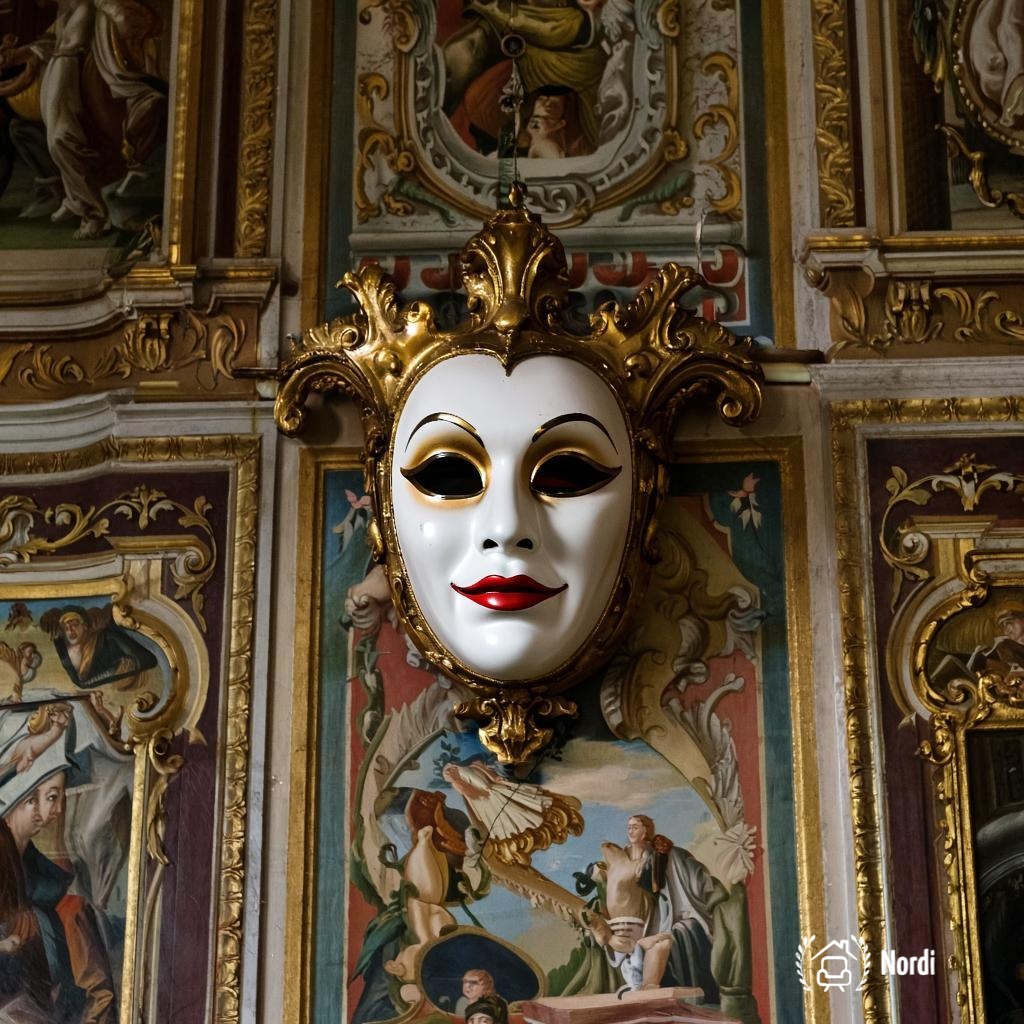
Commedia dell’arte originated in Italy in the 16th-17th centuries as improvisational theatre, where actors performed stories in city squares and courtyards. An important feature was the masks and distinctive costumes that allowed the audience to instantly recognise the characters.
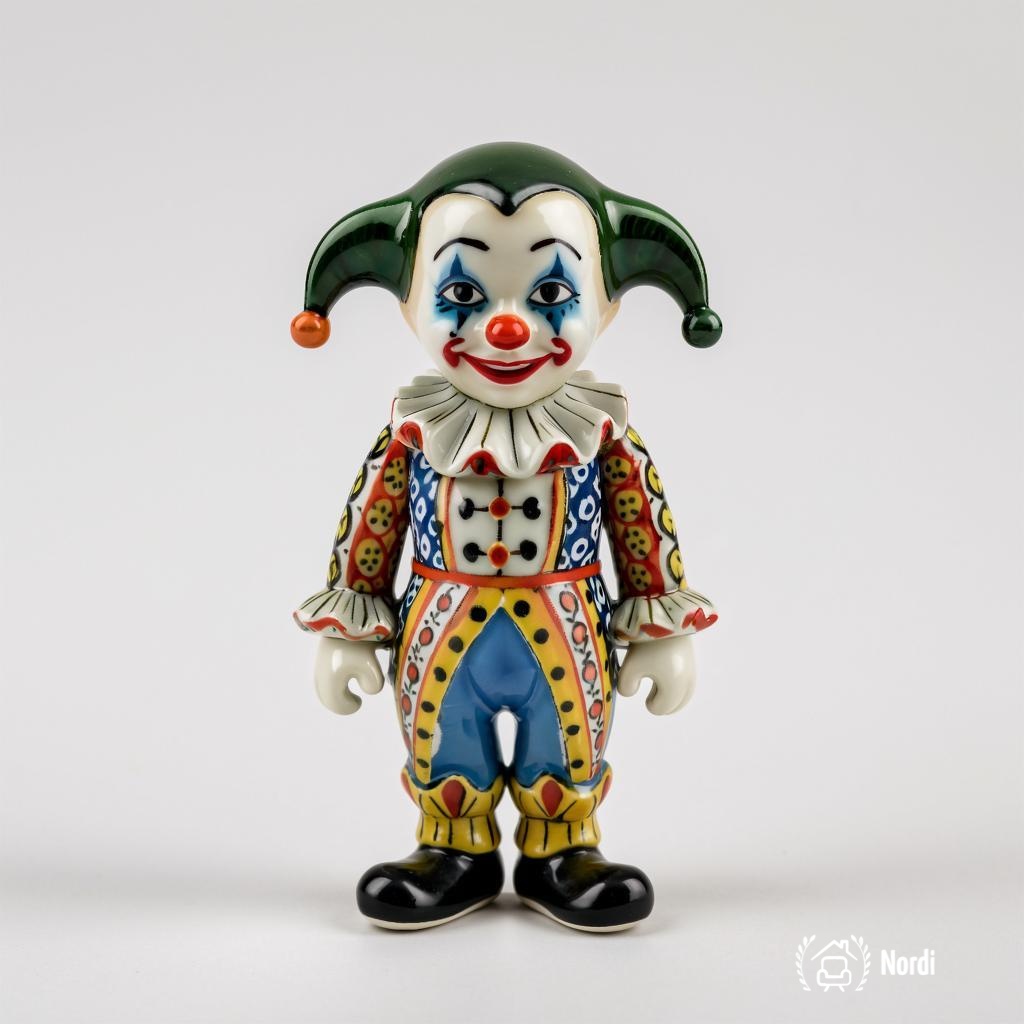
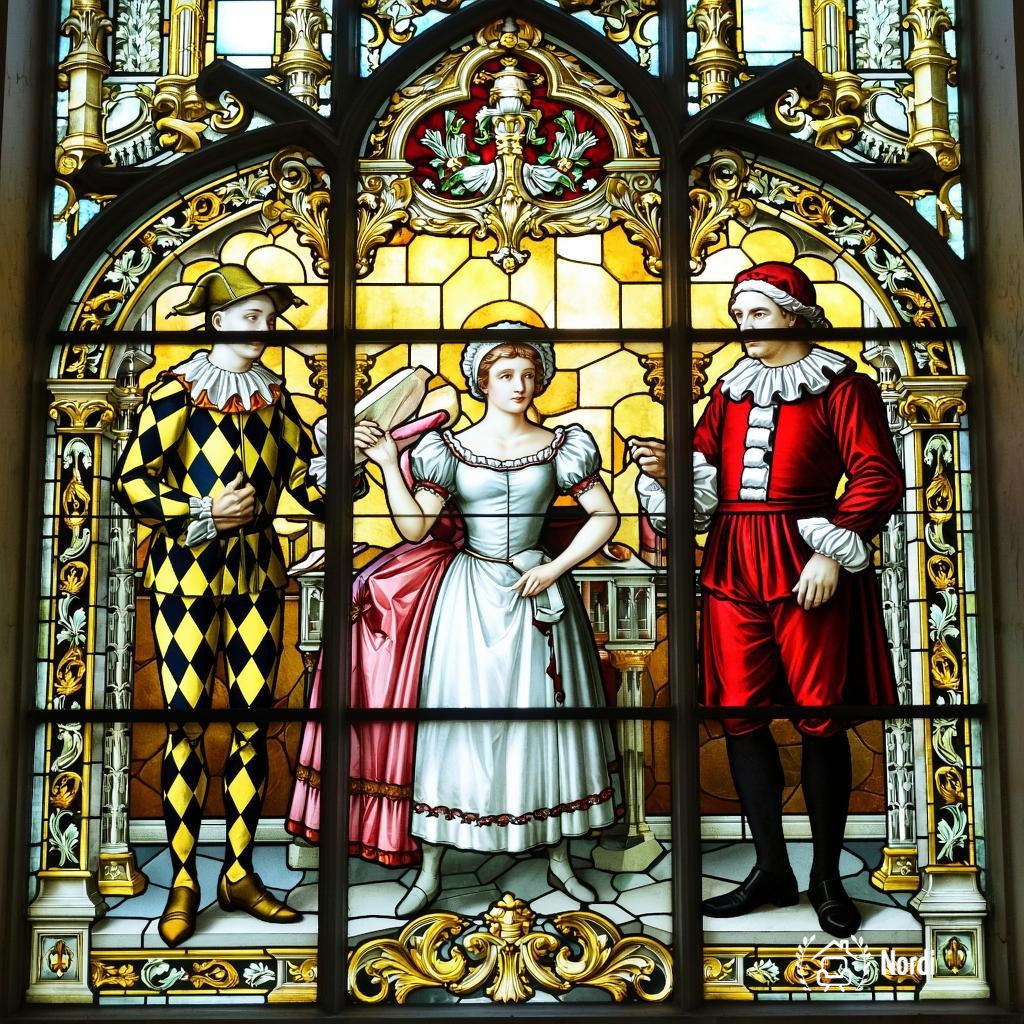
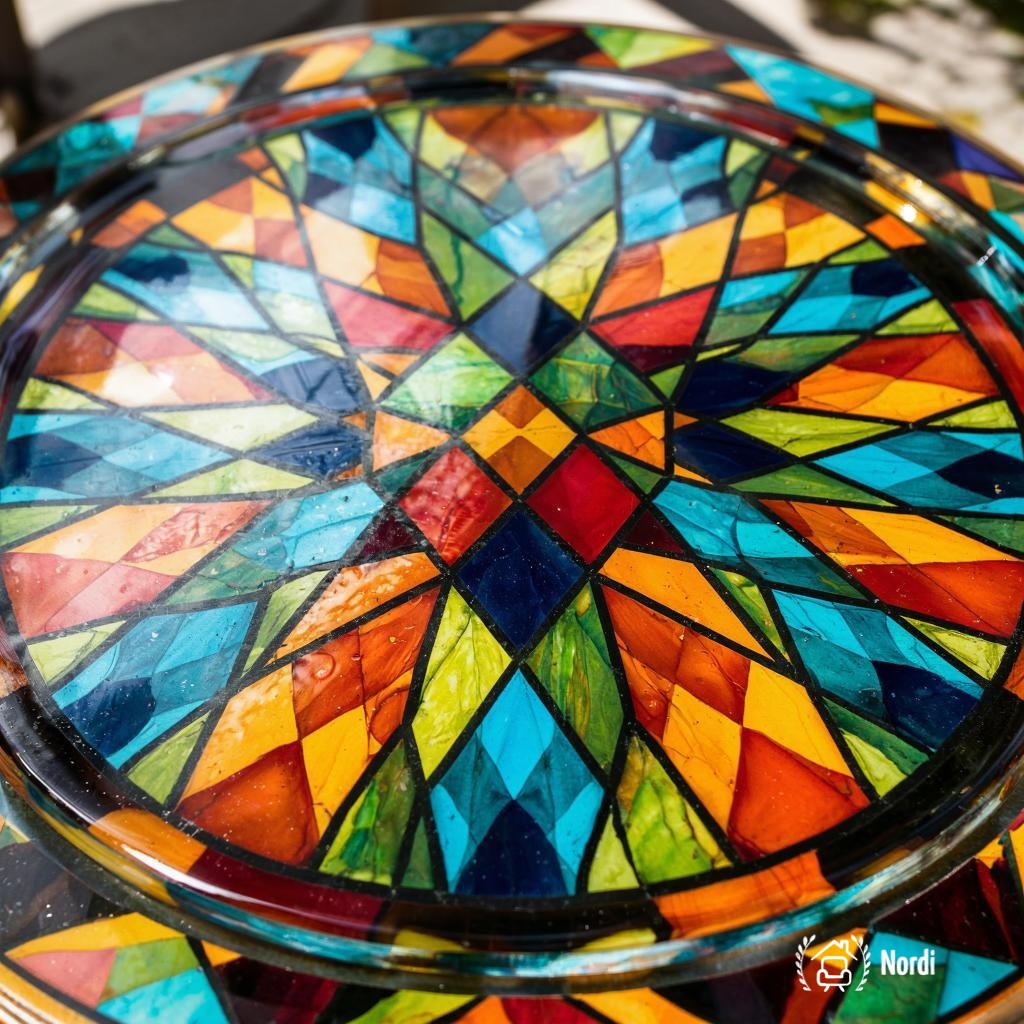
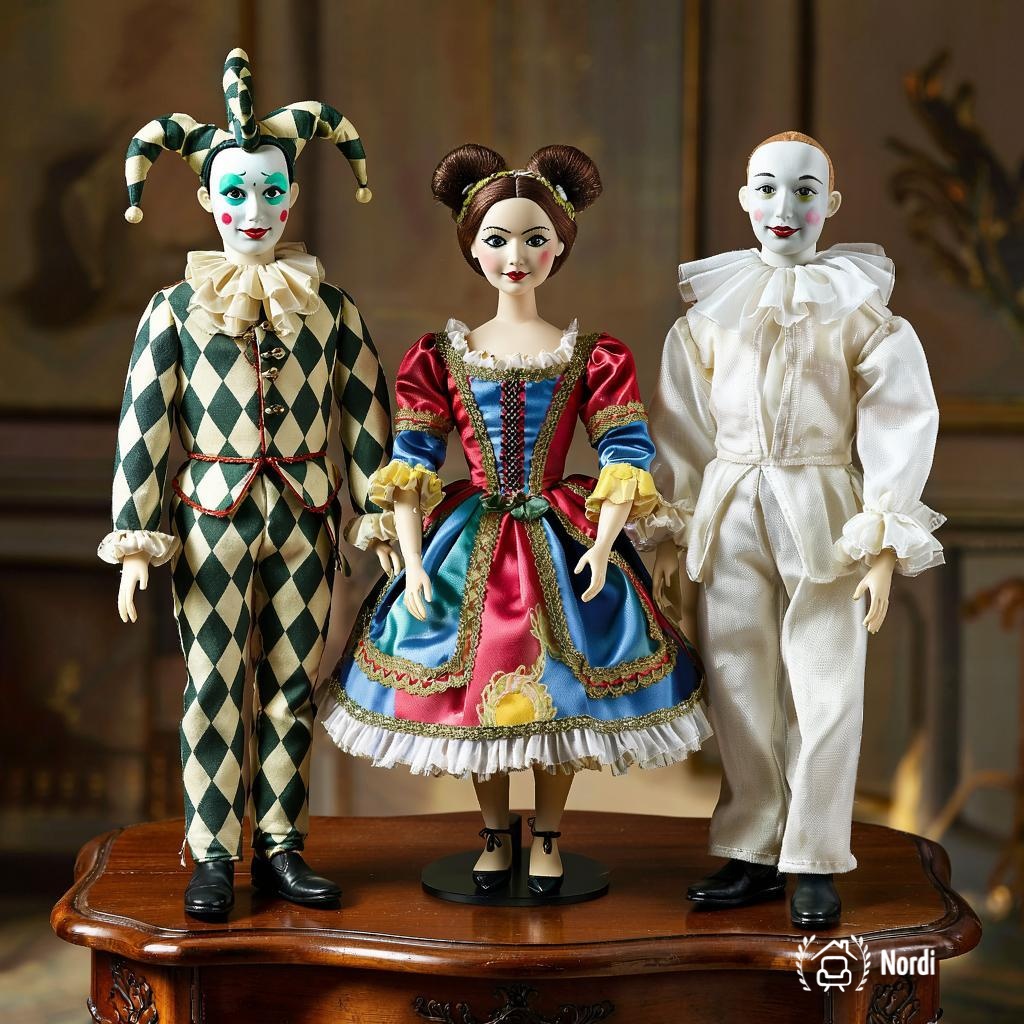
Arlecchino is one of the most recognisable characters. He is a servant, cunning and witty. His costume is famous for its patchwork mosaic: a set of diamond shapes of different colours, creating a dynamic, playful image.
Arlecchino’s mask partially covers the face, emphasising the eyes and expression, complemented by the bright colours of the costume. This image has become a source of ideas for graphics, fabrics and decorative motifs in art and interior design.
In interior design, the harlequin style is expressed through colour blocks, diagonal patterns and the dramatic staging of space: accents, contrasts and theatrical touches.
How to incorporate harlequin into your interior design: concept and principles
The main idea is to create a space that feels lively and playful, but not overwhelming. Harlequin is a balance between ‘bright’ and ‘refined,’ between the hustle and bustle of a celebration and the nuances of home comfort.
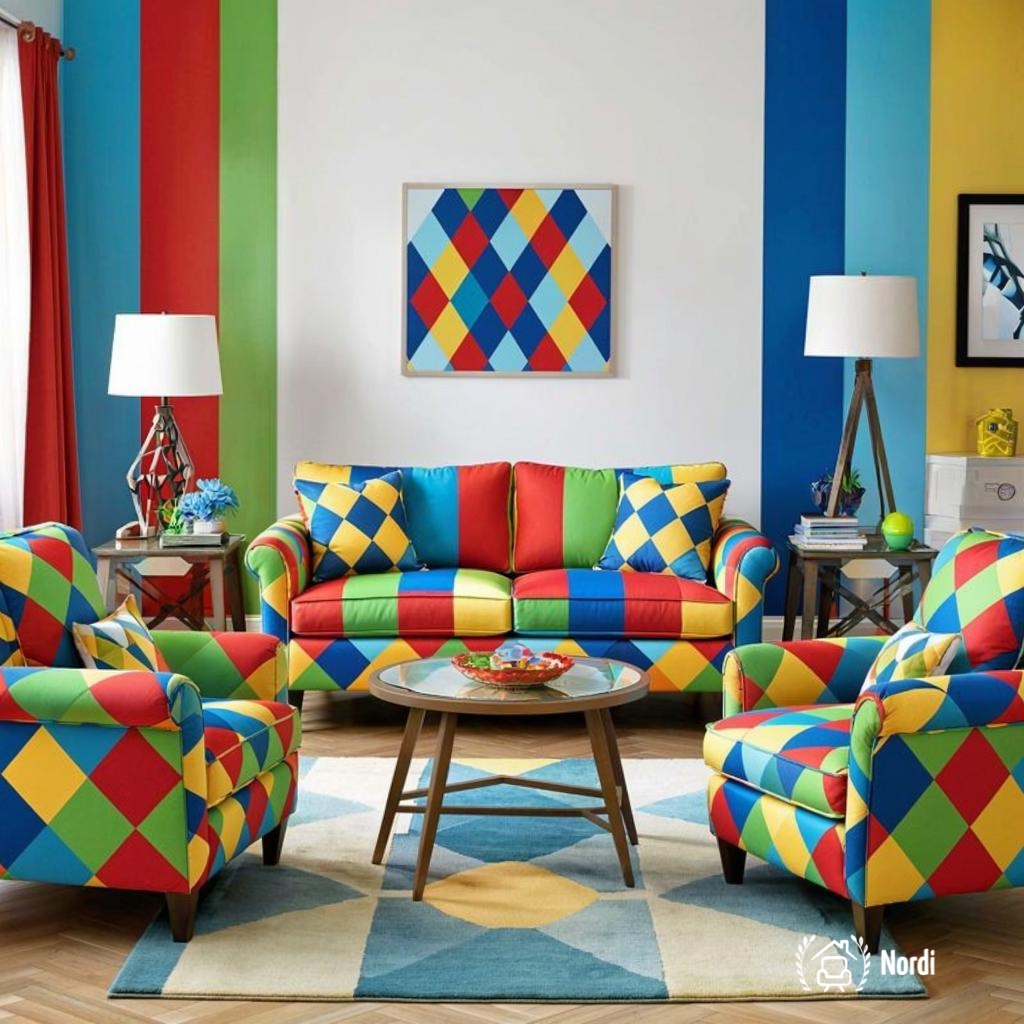
Palette: characteristic harlequin highlights are bright, pure base colours in the form of coloured diamonds, often combining red, blue, green, yellow and white. In addition, neutral backgrounds (cream, peach, warm grey) can be used for balance.
Contrast order: it is important to keep one or two bright diagonal accents so as not to overload the design. Choose additional colours in a calmer range or in textiles with less graphic weight.
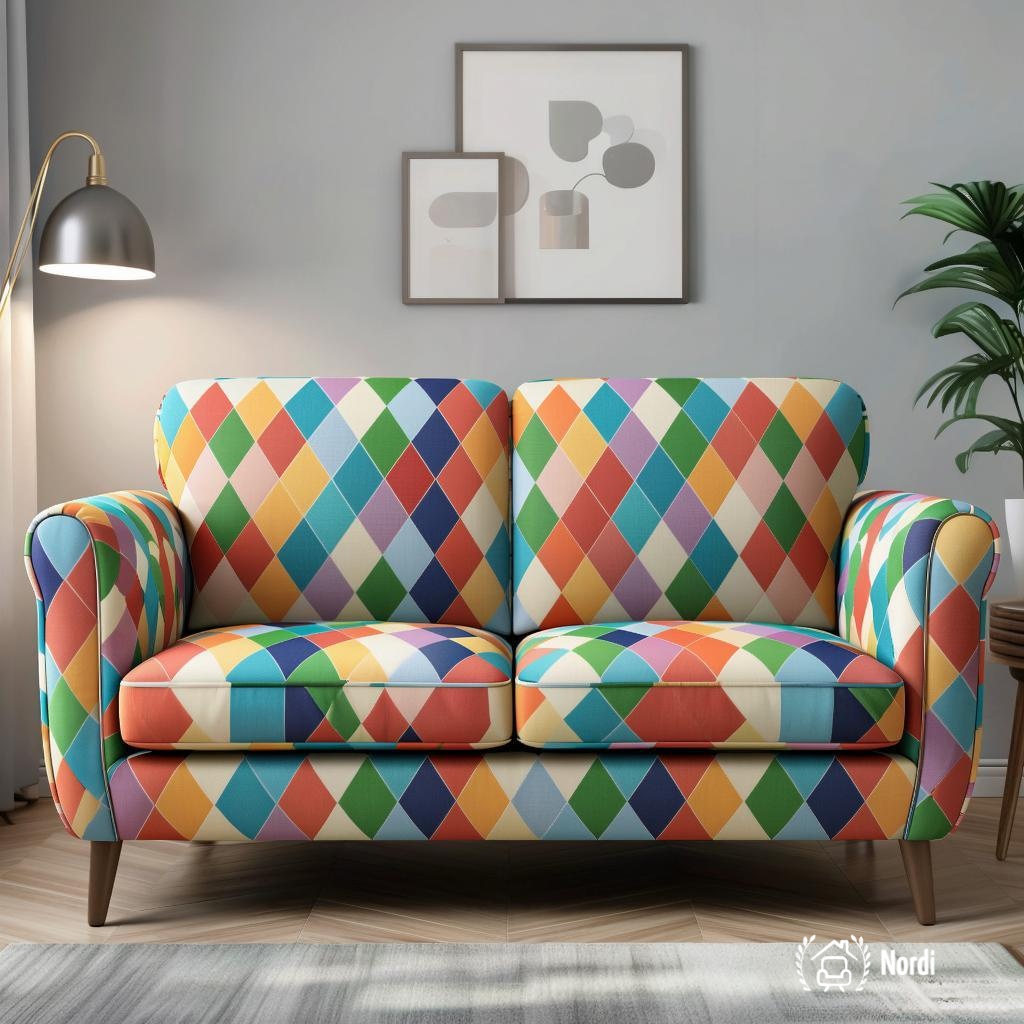
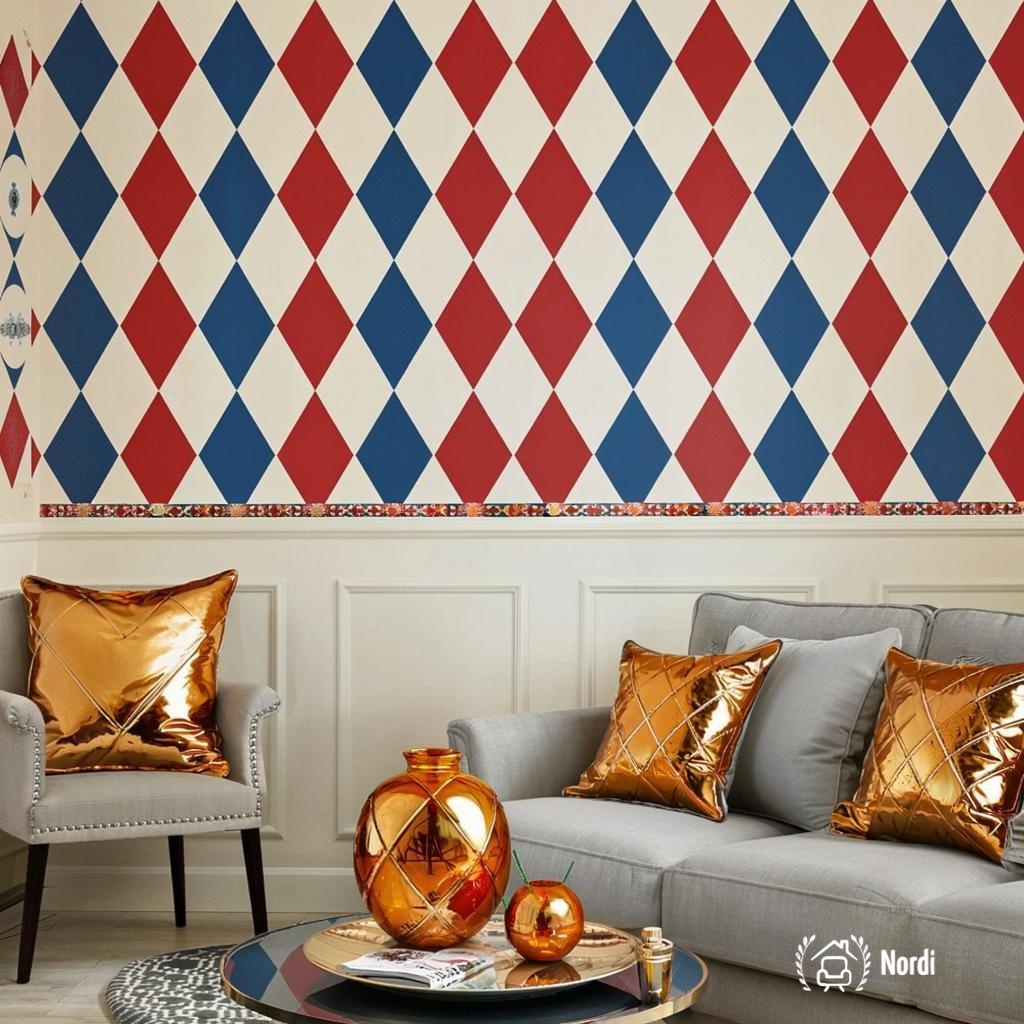
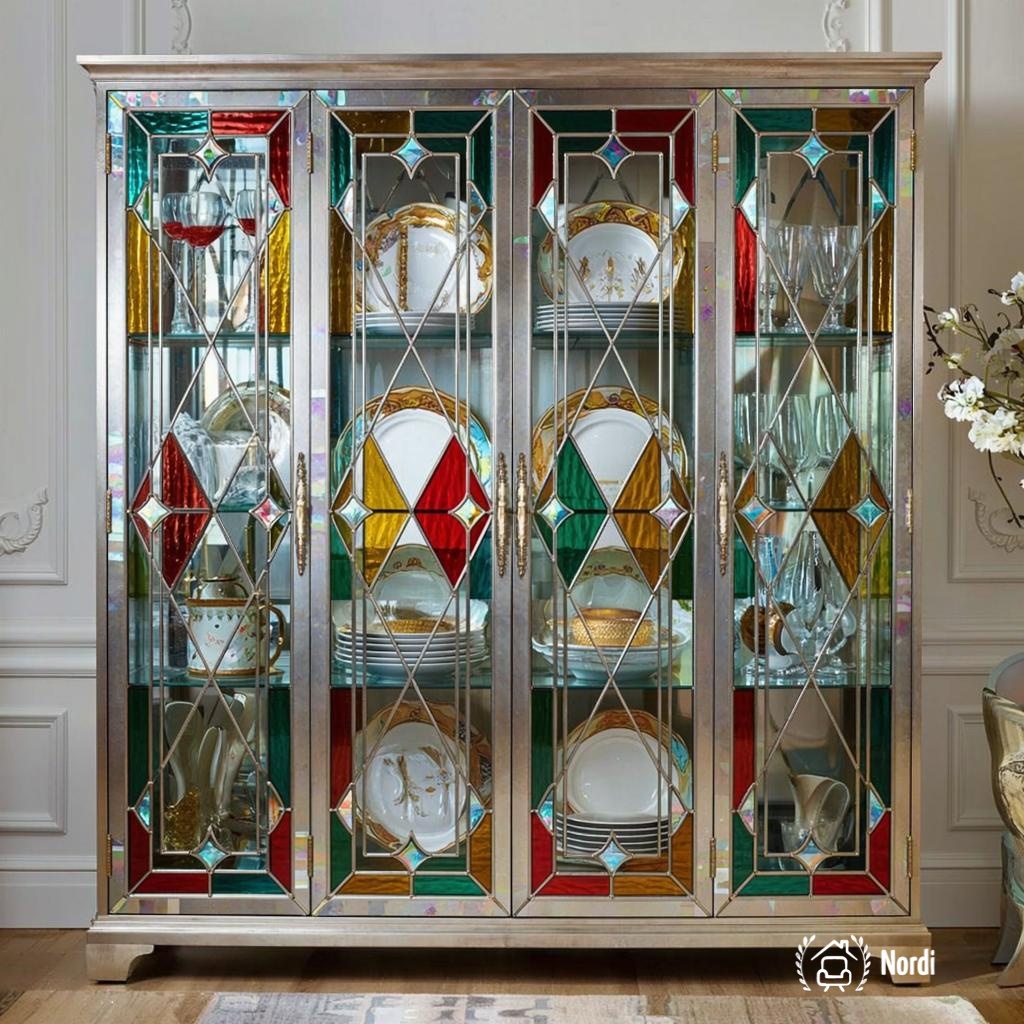
Diamond motif: Harlequin is often associated with diamond-shaped patterns. This motif can be used as a decorative principle — on walls, on textiles, tiles or carpets — but with consideration for scale and proportions.
Practical implementation: materials, textures and composition
Colour palette
- Base background: cream, light beige, warm grey — create a calm foundation.
- Harlequin accents: bright red, ultramarine blue, emerald green, sunny yellow, white. Black can be added for contrast in accessories.
- Accessories: metals (brass, bronze) and warm metals to match the scene — they add depth and ‘theatre’ to the light.
There are several ways to incorporate a diamond motif
- Accent wall: wallpaper or paint one wall with a diamond print or diamond-shaped parquet tiles. It is important to adjust the size of the pattern: a large pattern is suitable for spacious areas, a small pattern is suitable for compact rooms.
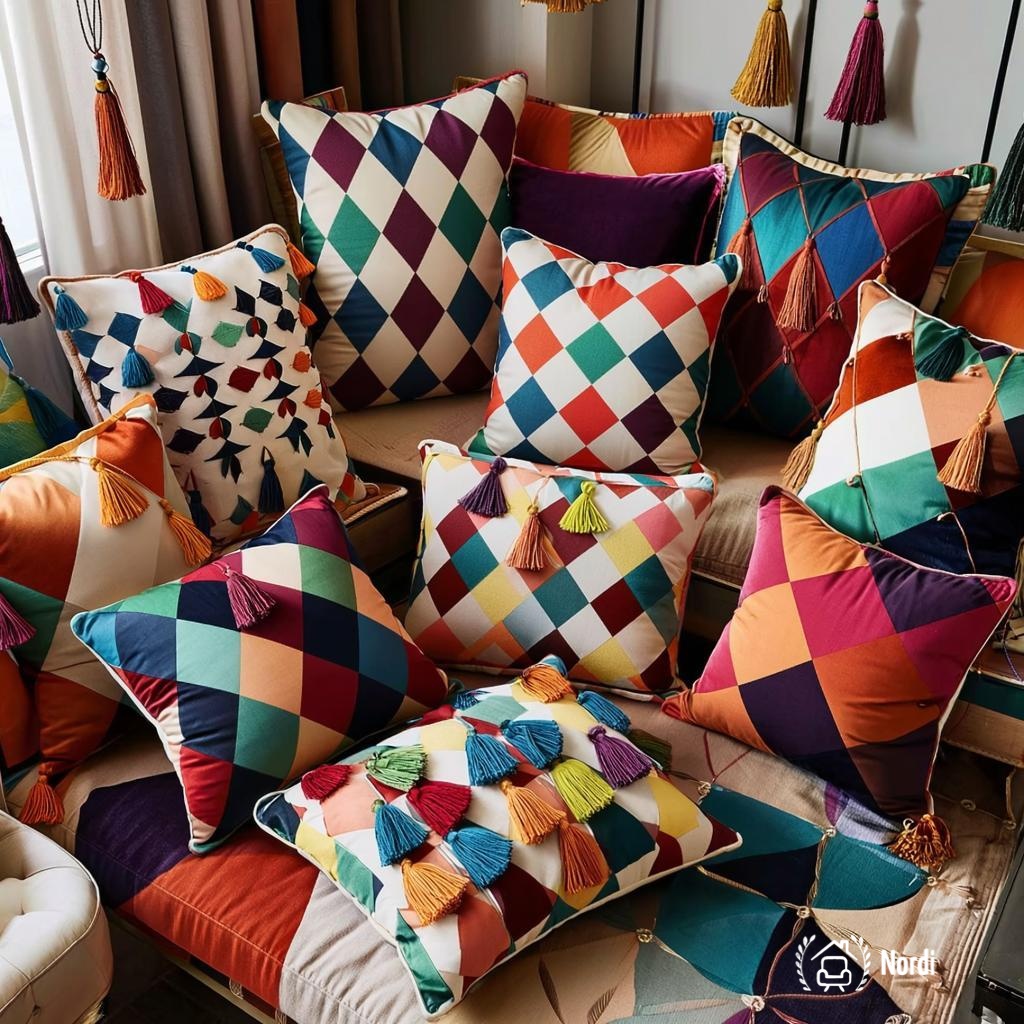
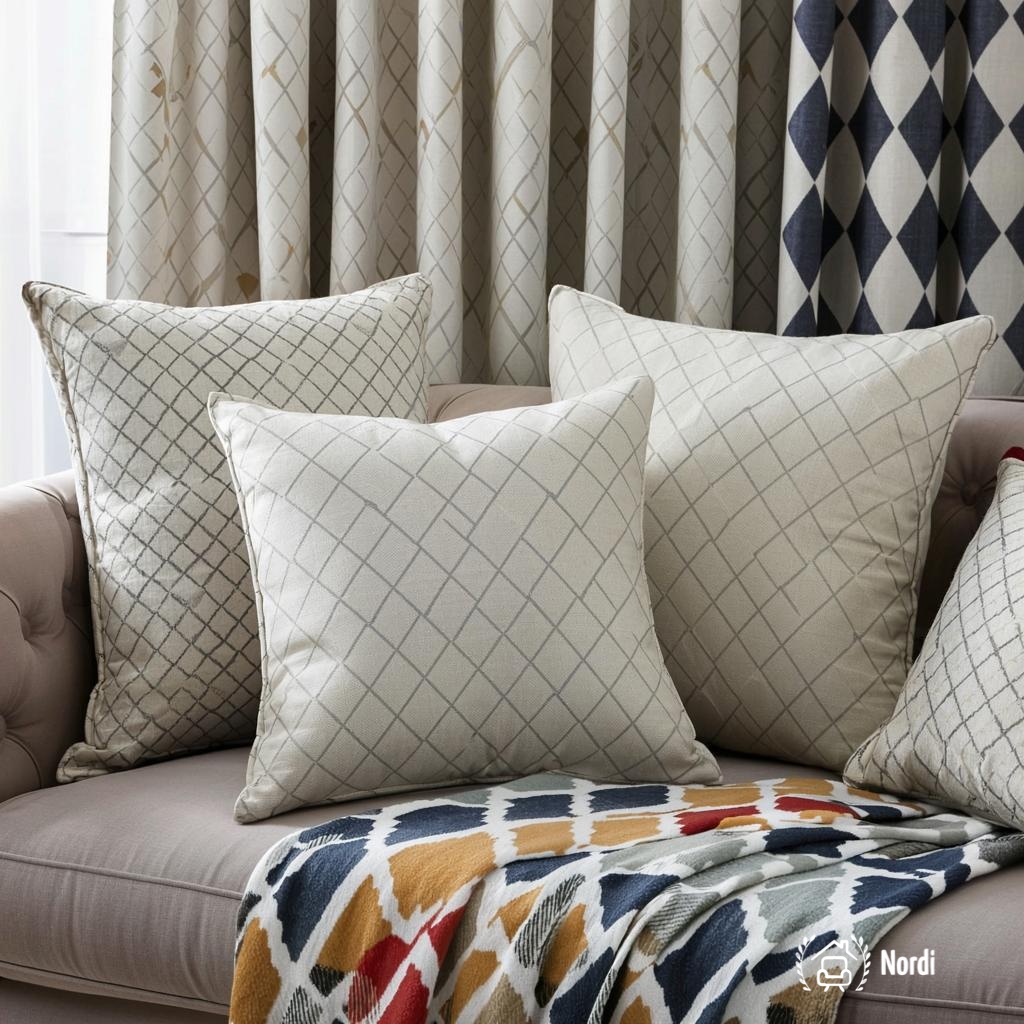
- Textiles: cushions, blankets, curtains with diamonds or a combination of harlequin colours; plain fabrics with a small graphic element are acceptable so as not to overload the visual.
- Rugs and tiles: diamond-shaped carpets, diamond-shaped tiles, a combination of different colours on the floor
- Especially effective in hallways and living rooms.
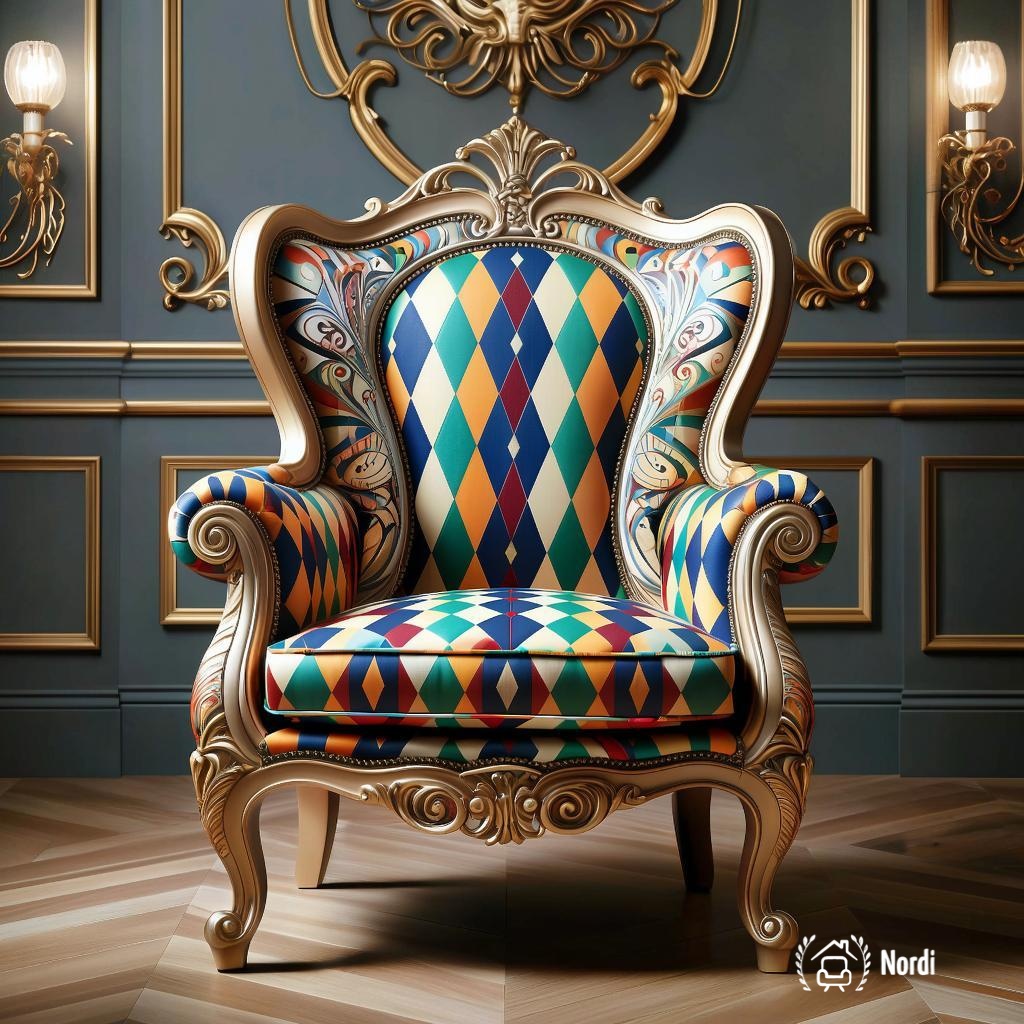
- Living elements: cornices, handrails, furniture upholstery with harlequin colour accents – delicately emphasise the style without overloading the space.
Materials and textures
- Natural materials: wood (solid wood, veneer), linen and cotton for textiles, natural leather or suede for furniture upholstery.
- Textiles with a slight sheen: velvet or satin for decorative cushions or decorative items to create a theatrical touch.
- Metals: brass, bronze or gold elements in lighting fixtures and accessories add a touch of grandeur.
Furniture and proportions
- Opt for contemporary shapes with a light character: clean lines, geometry and distinctive graphics will emphasise the harlequin approach without overloading the space.
- Combination of styles: modern furniture with vintage elements (e.g., a chair in a vibrant colour but with a minimalist base) creates a contrast between theatrical history and modernity.
Lighting
- Central lighting solution in the form of floor lamps and pendant lamps with a distinctive shape.
- Accent lighting to highlight diamond-shaped details: LED strips along the stairs, accent wall lighting.
Decor and art
- Paintings and graphics reminiscent of theatre posters or illustrations of commedia dell’arte characters.
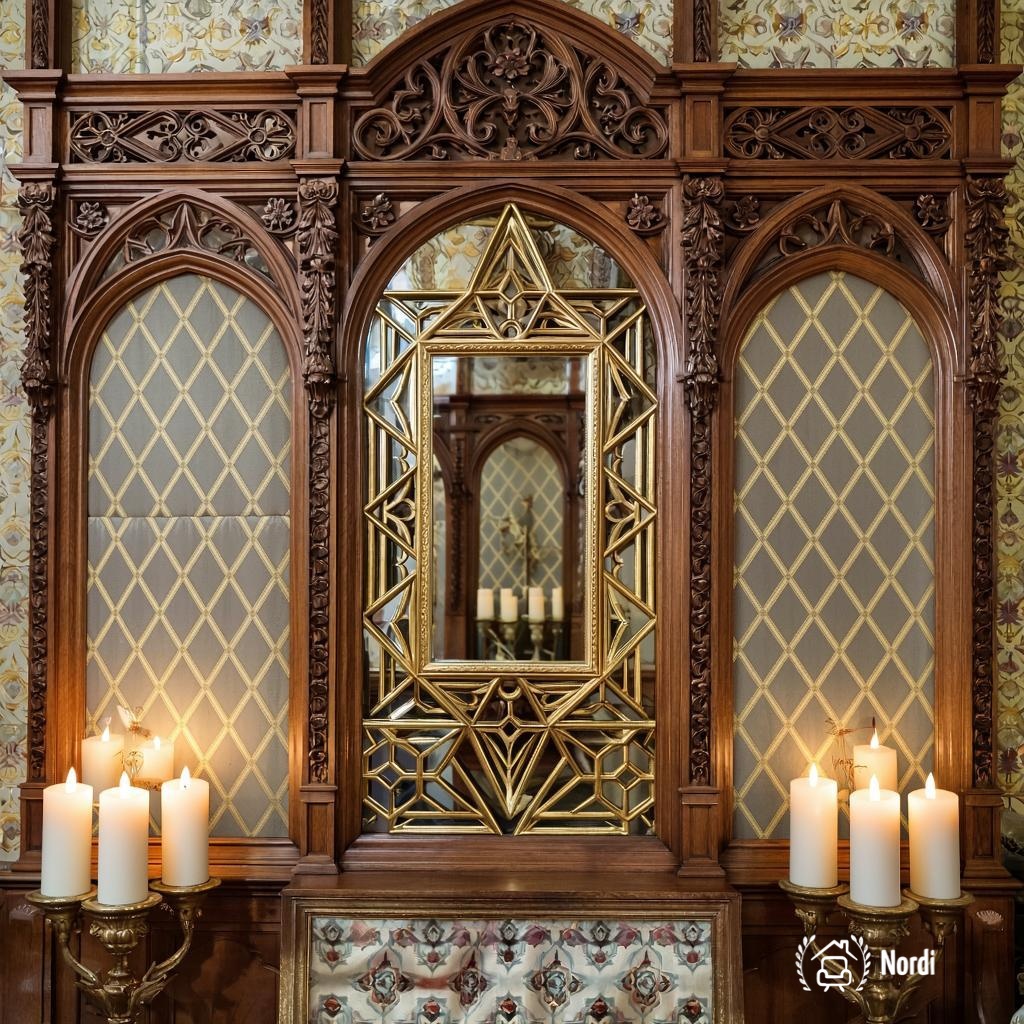
- Frames with decorative carvings, mirrors with geometric frames, fabric panels with rhombuses.
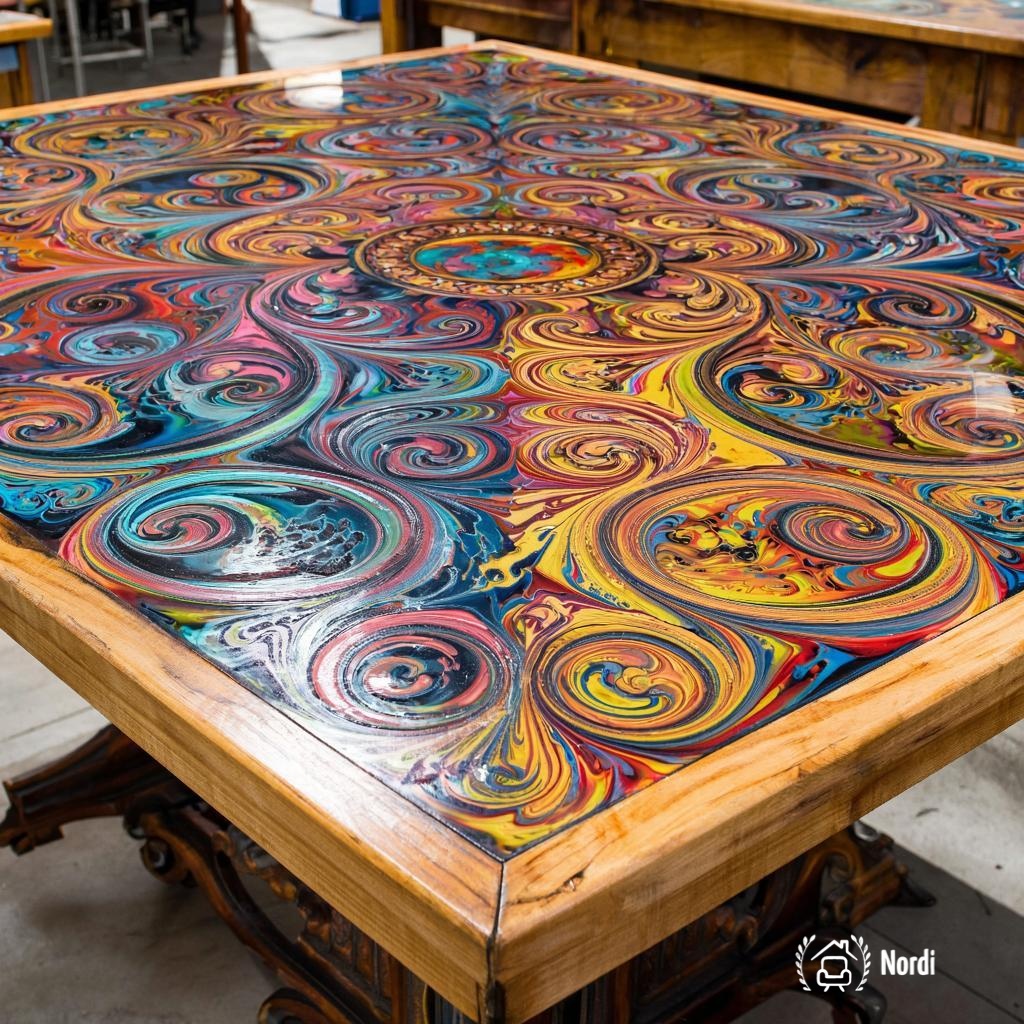
- Accessories: trays, vases, ceramics in bright colours — they complement the liveliness of the composition.
Composition order
- The principle of ‘one bright accent’ on the central wall or in the motif area — avoid the simultaneous chaotic repetition of several luminous motifs throughout the room.
- Let the space breathe: leave neutral areas and clean surfaces for the eyes.
3 practical colour scheme sets for the harlequin style
Delicate theatrical: basic cream background; accent wall in a diamond print combining red and blue; furniture in grey-beige tones; decorative elements in warm amber metals.
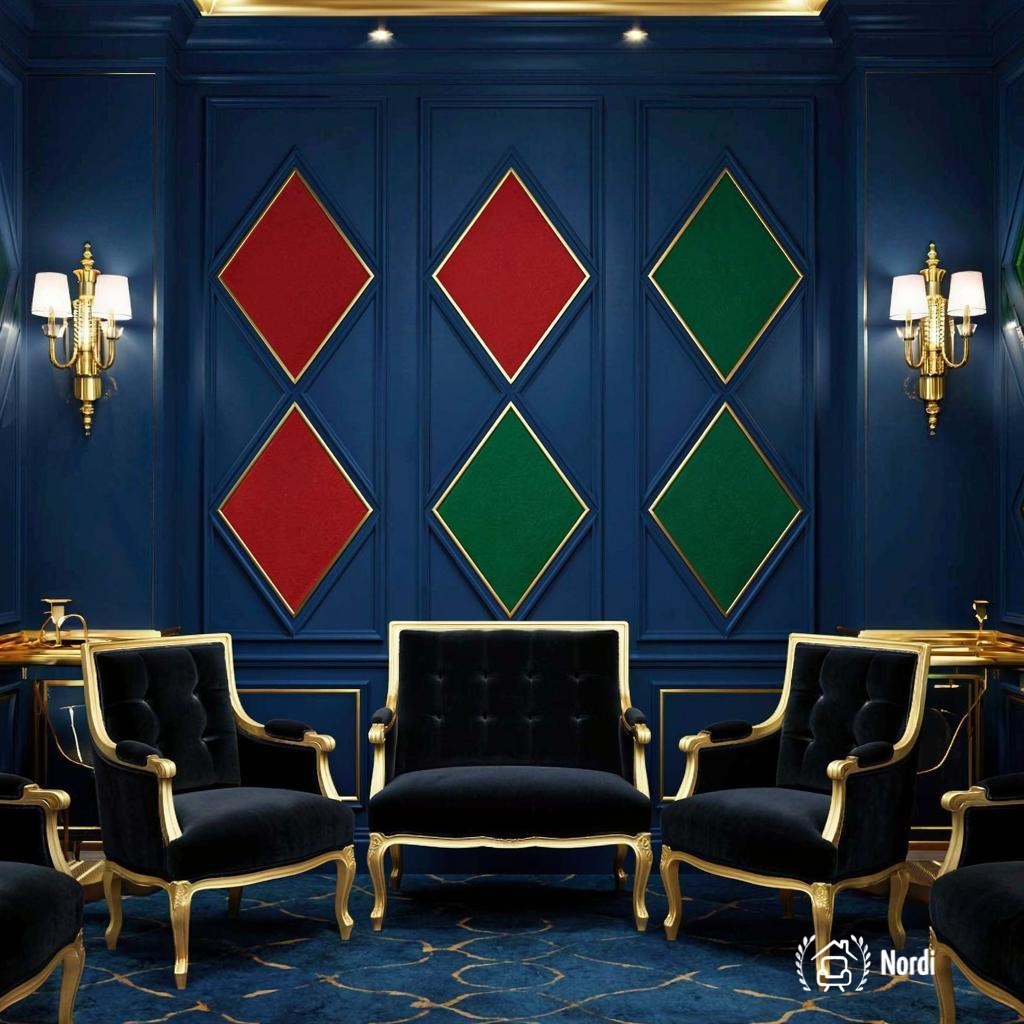
Elegant riot of colour: dark blue walls, diamond-shaped accent insert in red and green; furniture with black upholstery and gold armrests; lamps with gold elements.
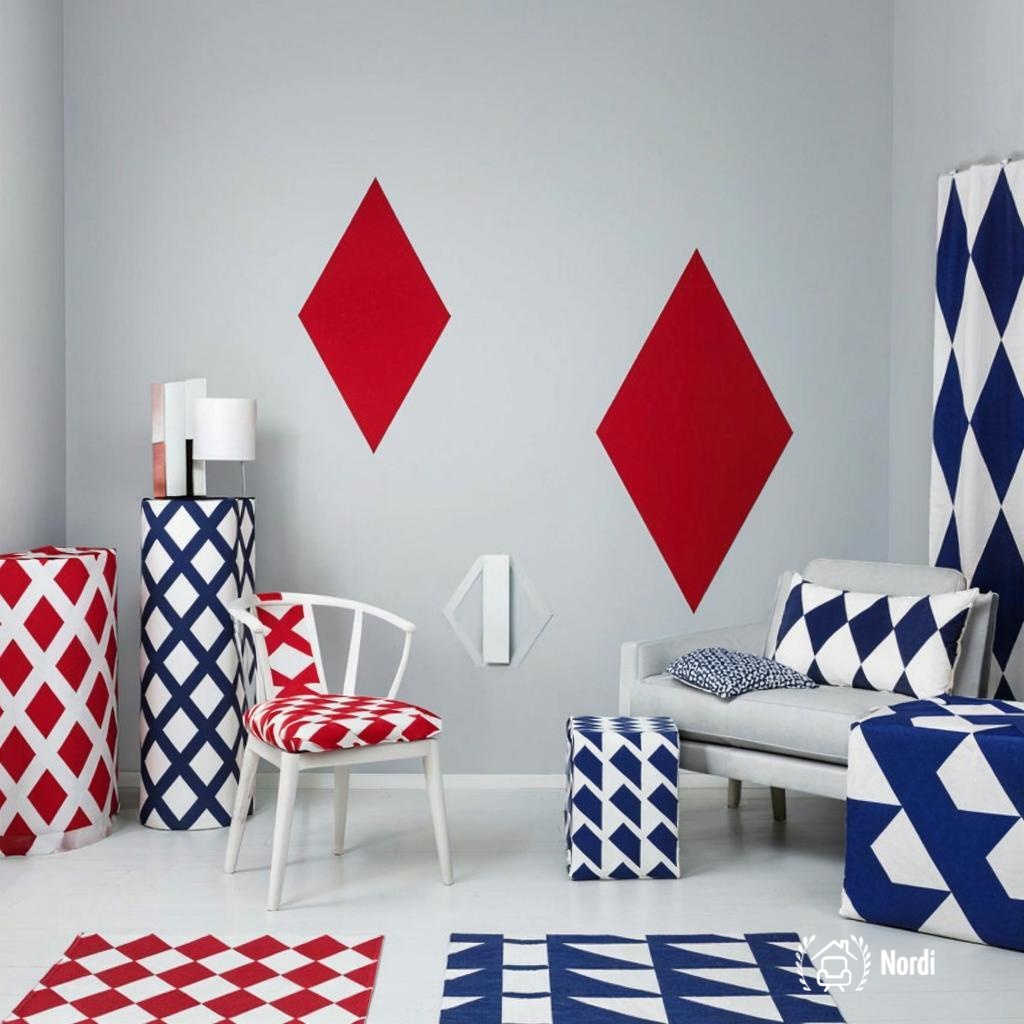
Modern harlequin: light grey walls, large diamond patterns on textiles in a combination of red and ultramarine; minimalist furniture shapes, plain surfaces.
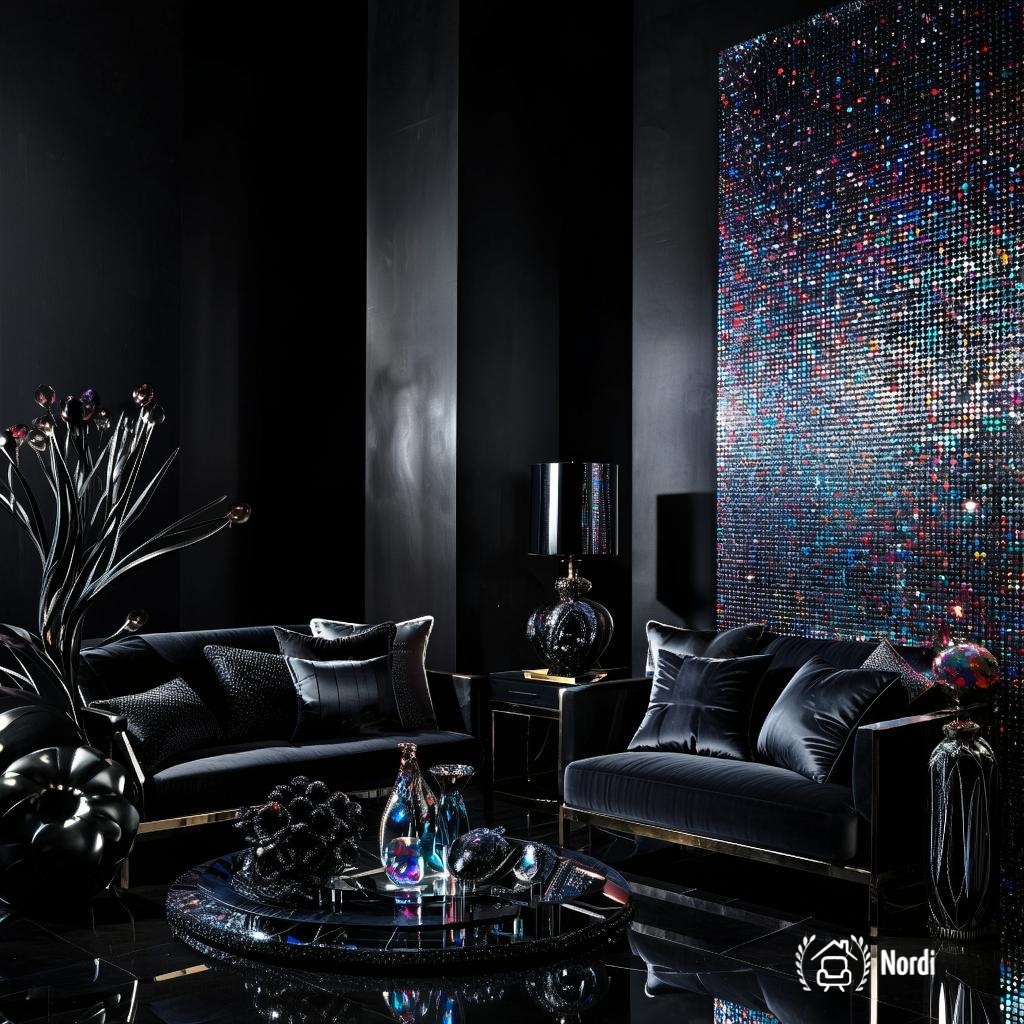
Dramatic evening option: black walls, diamond accent on the wall in bright colours; furniture upholstery with contrasting textures, deep metals and glass for theatricality.
Common mistakes and how to avoid them
Overload: too many diamonds on the walls, textiles and furniture in one room can create visual noise. Choose one dominant highlight and maintain balance with neutral details.
Inappropriate scale: avoid very large diamonds in small spaces; use a moderately large motif or combine a large diagonal pattern with small details on textiles.
Inconsistent styles: Harlequin patterns go well with modern elements and minimalist forms, but it is not advisable to mix too many different items in one space without an overall concept.
Conclusion
The harlequin style in interior design is an opportunity to give a space theatrical drama, the joy of colour and an intellectual play of forms. The right balance of rich rhombuses, a competent choice of basic neutral tones and a fresh approach to furniture will help create a room that looks like sequins on stage and a cosy home living room at the same time. If you wish, I can select a specific palette for your project, calculate the proportions of the diamonds for the area and suggest a set of materials and furniture in the harlequin style, adapting the idea to your style and budget.
3 responses to “Harlequin: in the spirit of comedy of masks and colourful palette”
Brighella, Colombina and Aleccchino.
Indeed three famous characters of Commedia dell’Arte.
A lovely use of it into design , the extent depends on the taste of one of course.
I would have appreciated in this article perhaps a more visual impact of the characters, elements into design rather than a stream of words.
Interesting idea, bring joy and hilarity into design.
I have an extreme interest in any mosaic (to some extent, I am a mosaic person myself), so it is absolutely impossible for me to bypass the mosaic character from Commedia dell’arte (Harlequin).
A mosaic of words, a mosaic of thoughts, a mosaic of feelings, a mosaic of characters, a mosaic of personalities into the same actor.