


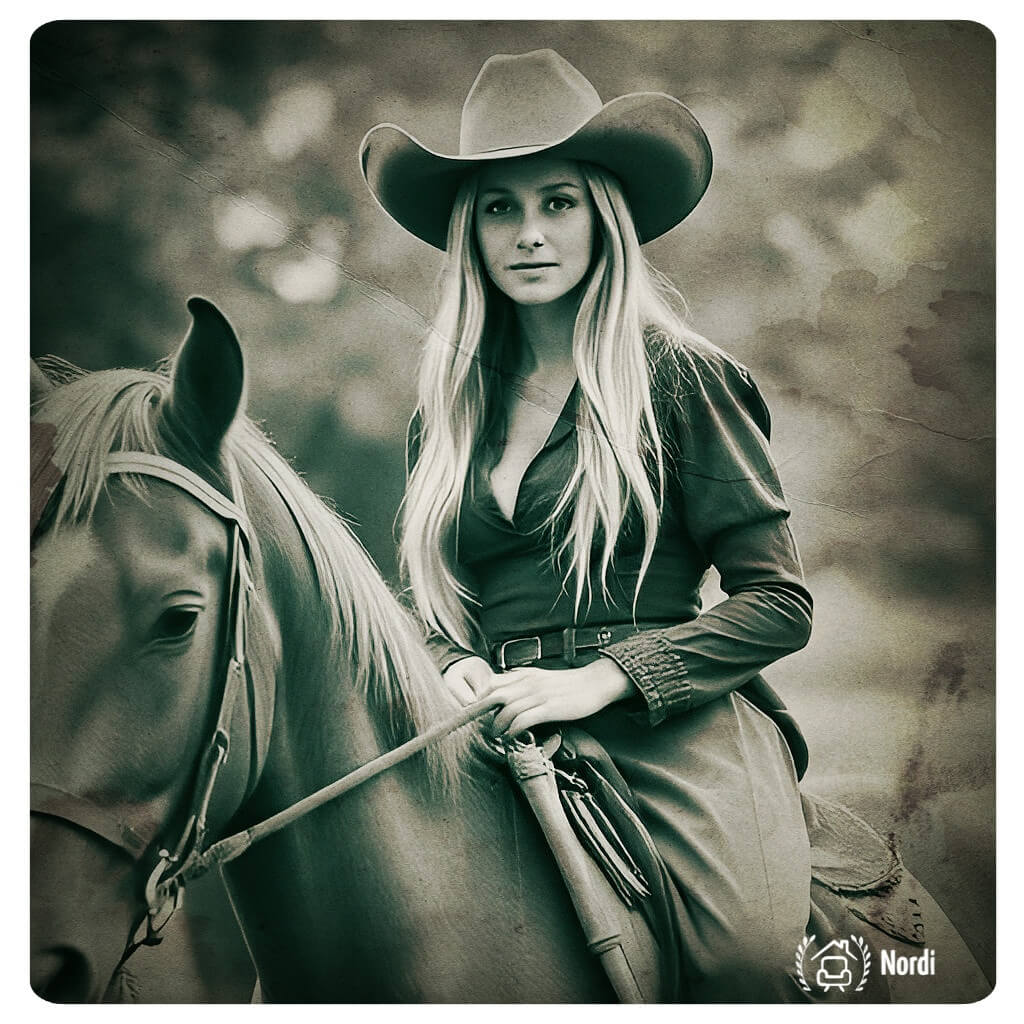
The Wild West is not only about legends and films, but also a powerful aesthetic that combines simplicity of materials, strength of lines and a spirit of freedom. Interior design in this style looks natural, rustic and adventurous — like a house where a Western hero has come to live. Here are the key features and practical tips for implementing this concept in modern conditions.
What distinguishes the Wild West style
- Practicality and durability: strong materials, longevity and the ability to live carefree in a house where every item is made ‘for a purpose’.
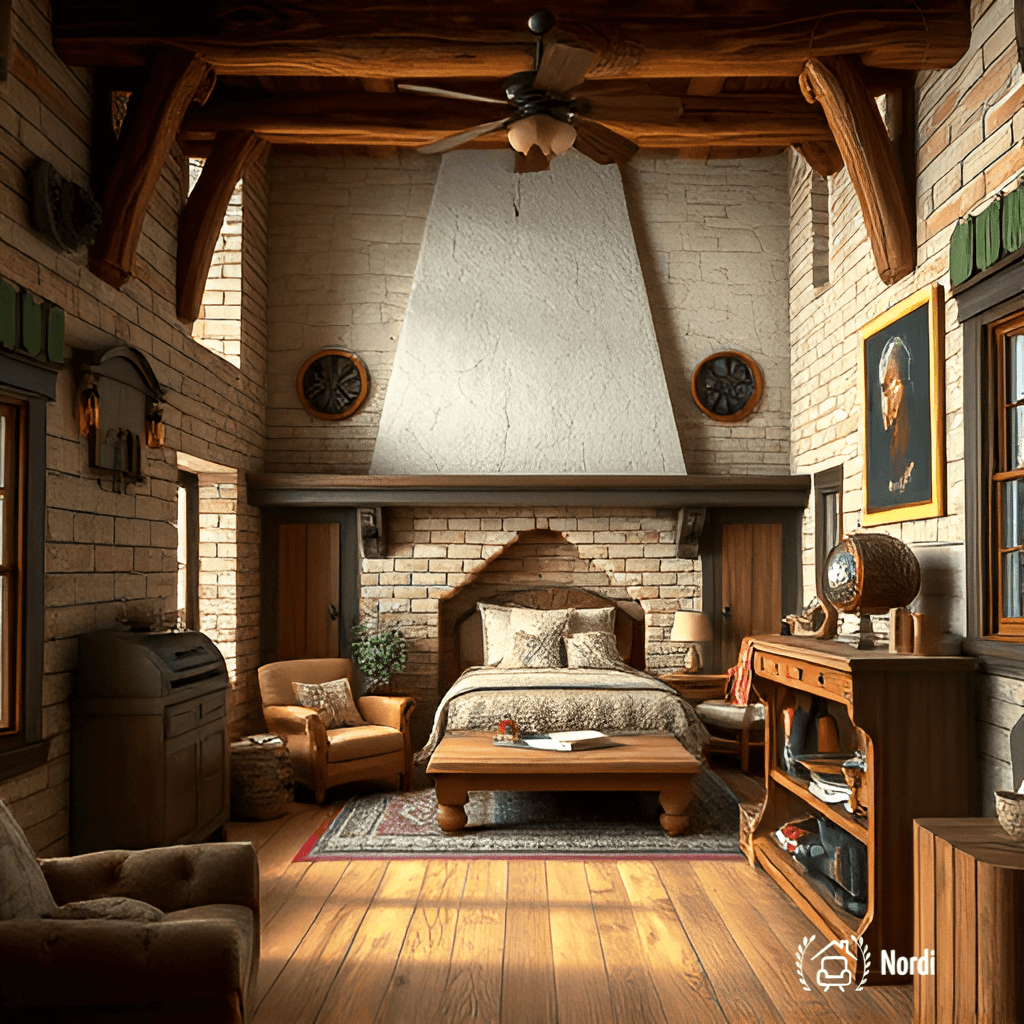
- Rustic with character: smooth surfaces are gradually replaced by the texture of metal, wood and stone. Rough walls, rough finishes, visible joints and traces of time create an atmosphere of worn-in comfort.
- Contrasting combinations: warm wood and leather contrast with cold metal and brick. It is important to balance warmth and industrialism.
- Historical mood, but without pretentious elements: highlights are reminiscent of the era of cowgirls, cowboys and ranches, but do not turn the interior into a museum. Moderation and stylish accessories are needed.
Palette, textures and materials
- Colour scheme: earthy tones — ochre, terracotta, grey stone, dark brown, deep green, black metal. Accents — bone, cream, sparkling copper and brass.
- Eco-friendliness and practicality: choose natural materials wherever possible. If you need a budget option, use decorative coatings that imitate the texture of wood or stone, and add authentic details in the form of accessories.
- Materials:
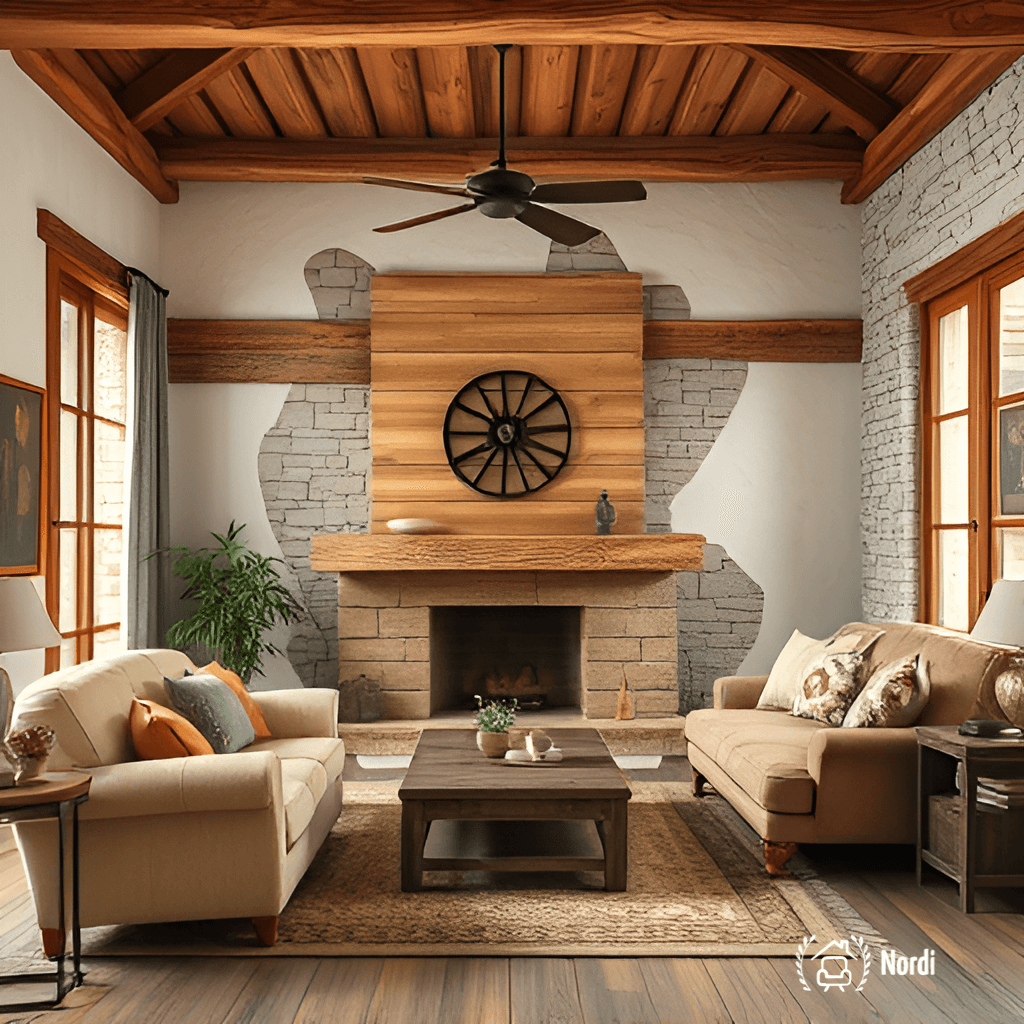
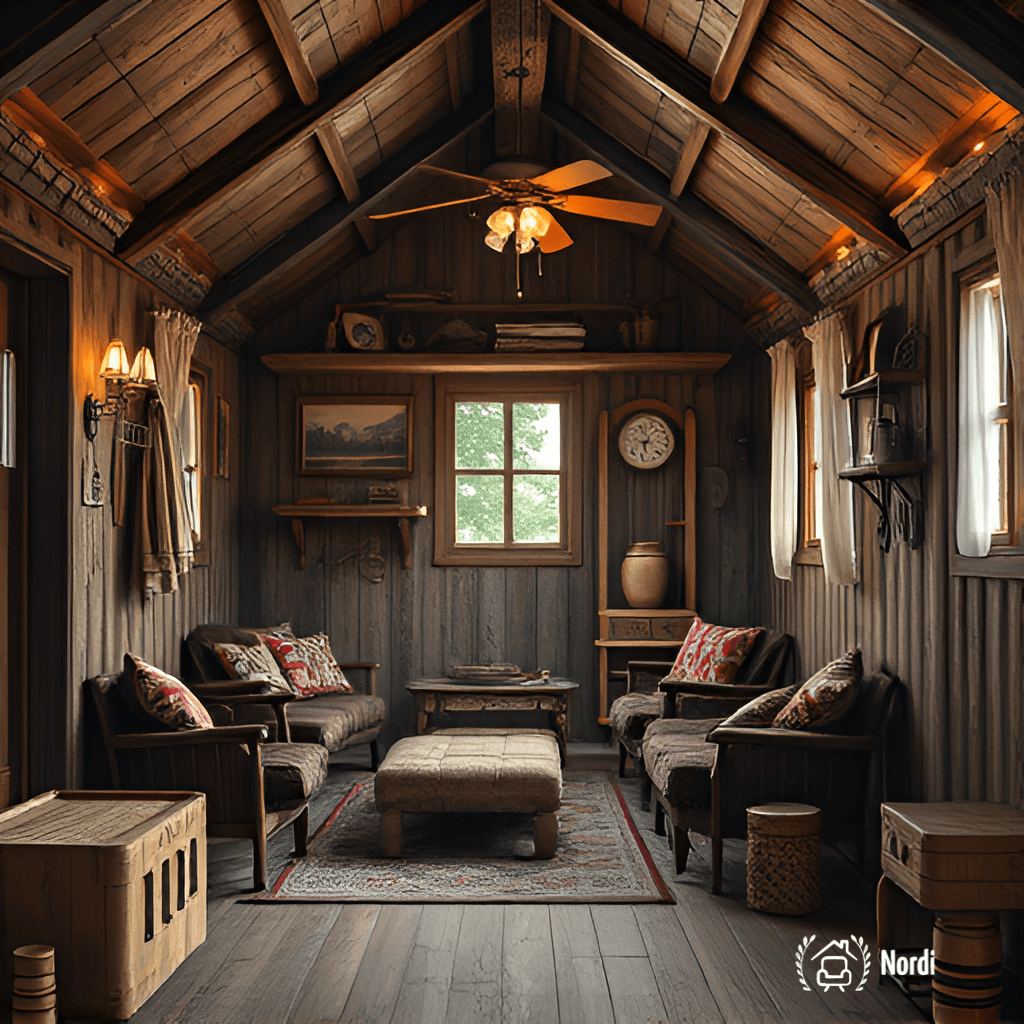
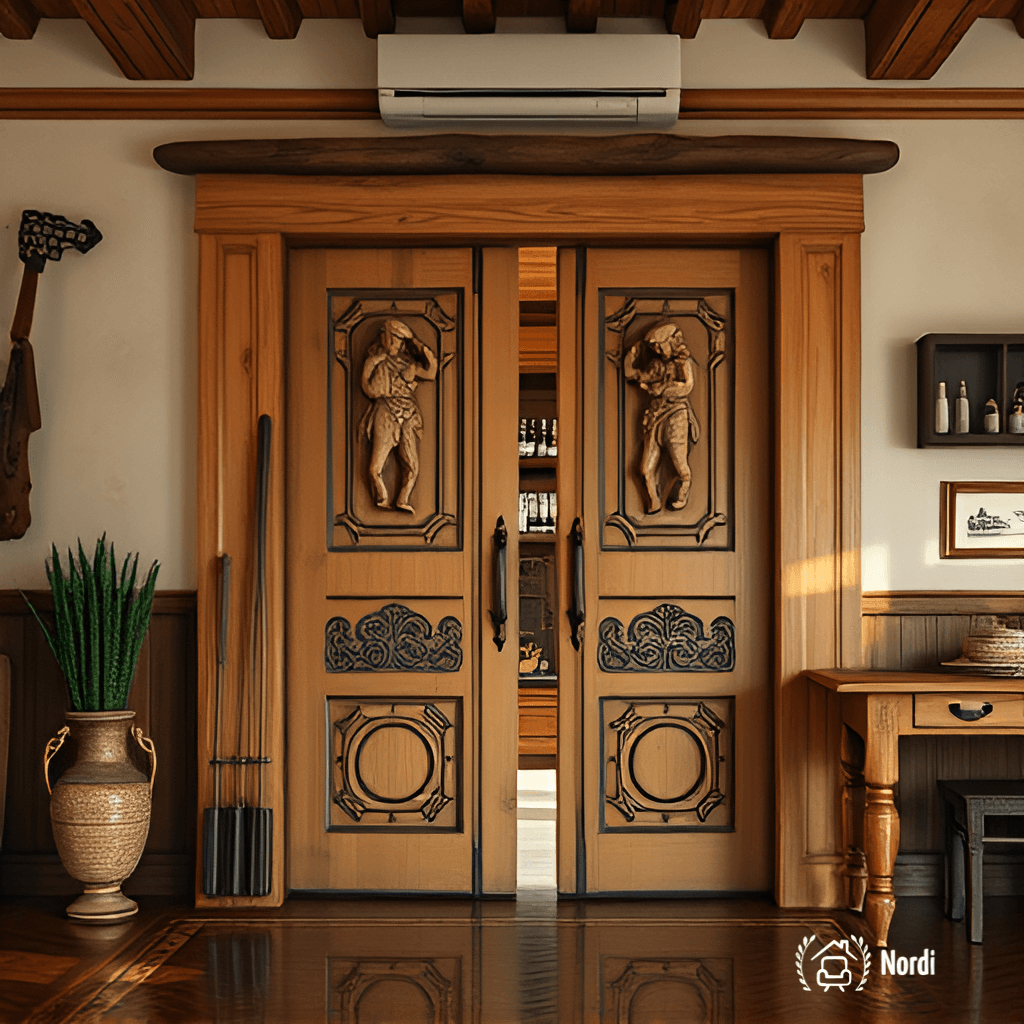
- Wood: solid oak or pine boards, rough-hewn surfaces, exposed beams on the ceiling.
- Stone and brick: natural texture of walls, stone columns, brickwork in the living room or kitchen area.
- Metal: wrought iron, brass, bronze in light fixtures, furniture frame elements, handles and chair legs.
- Leather and textiles: leather seats and sofas, suede, tweed, denim upholstery, thick cotton or linen curtains.
Furniture: shapes, proportions, style
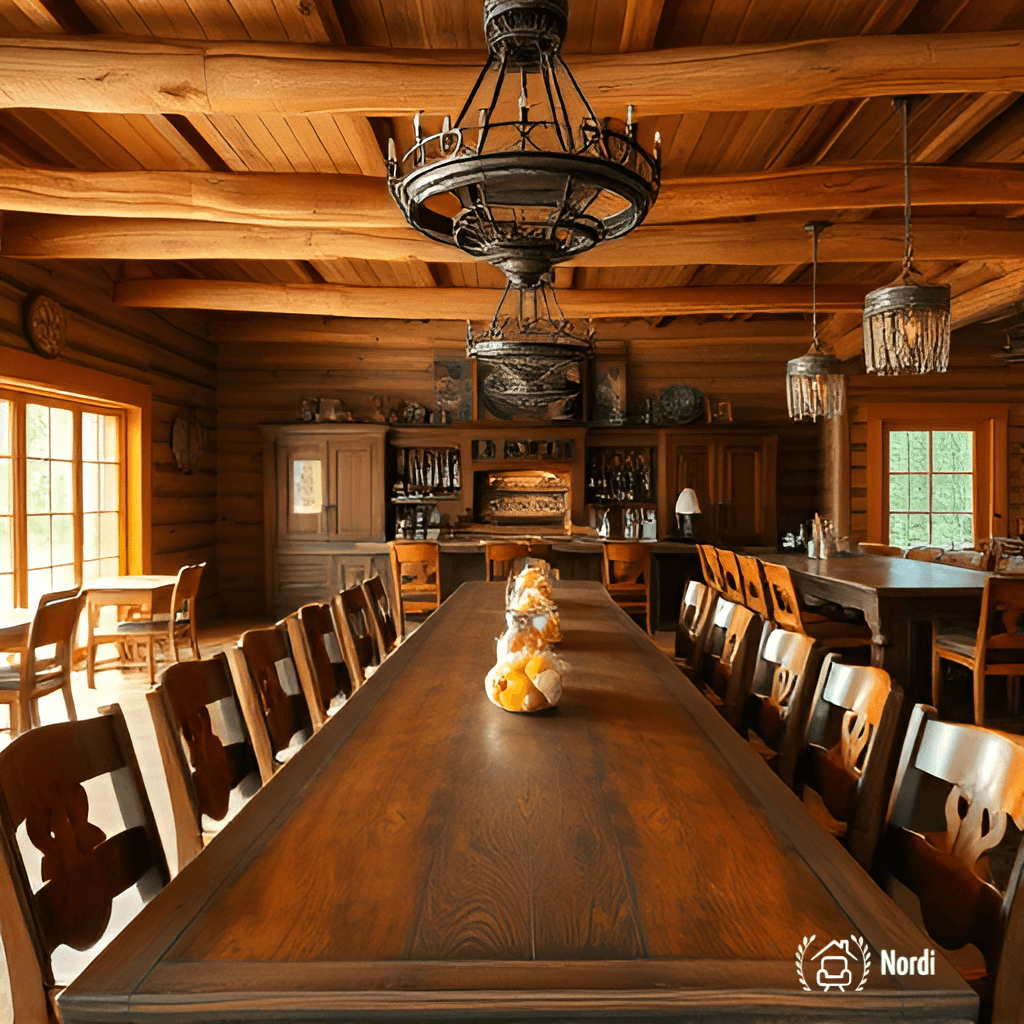
- Tables and surfaces: solid tabletops on thick wooden legs, plantation tables or ranch-style tables.
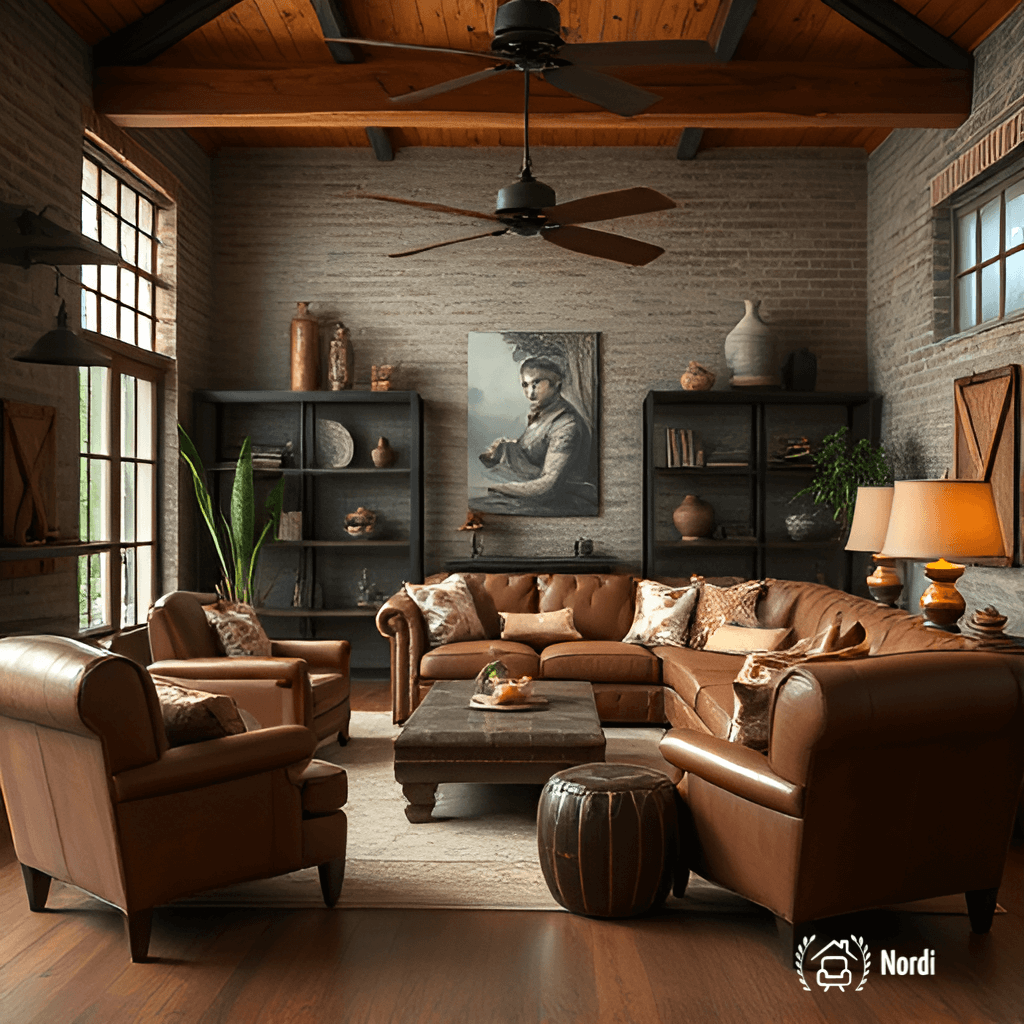
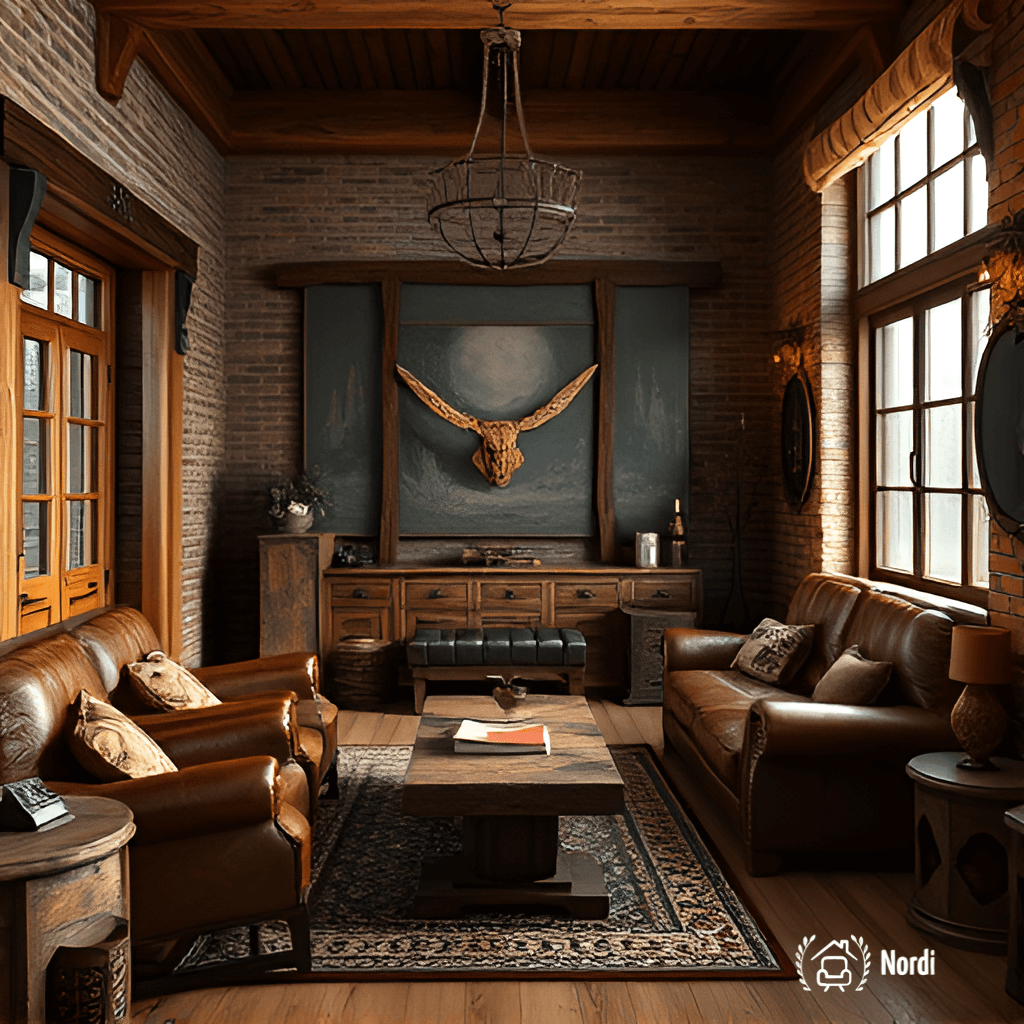
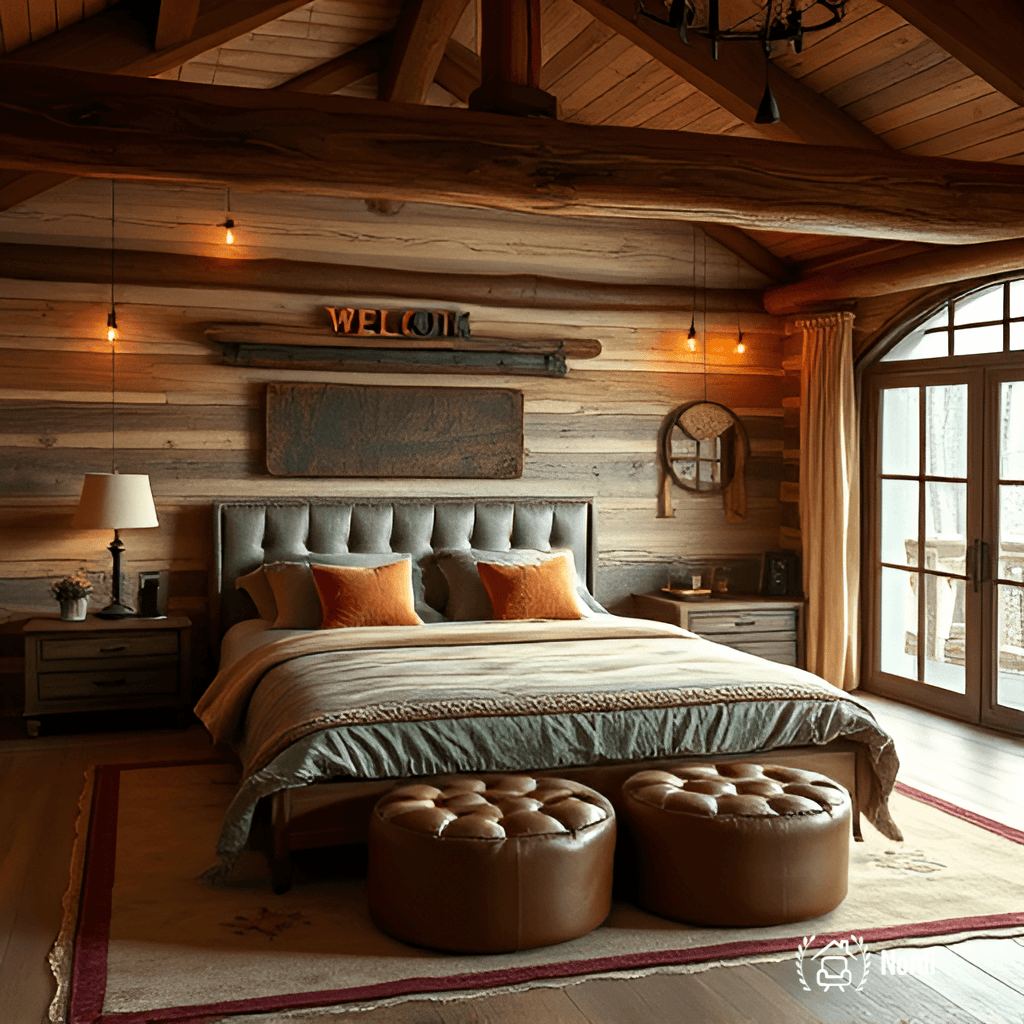
- Sofas and armchairs: large leather sofas, chairs with leather seats and metal frames, genuine leather poufs.
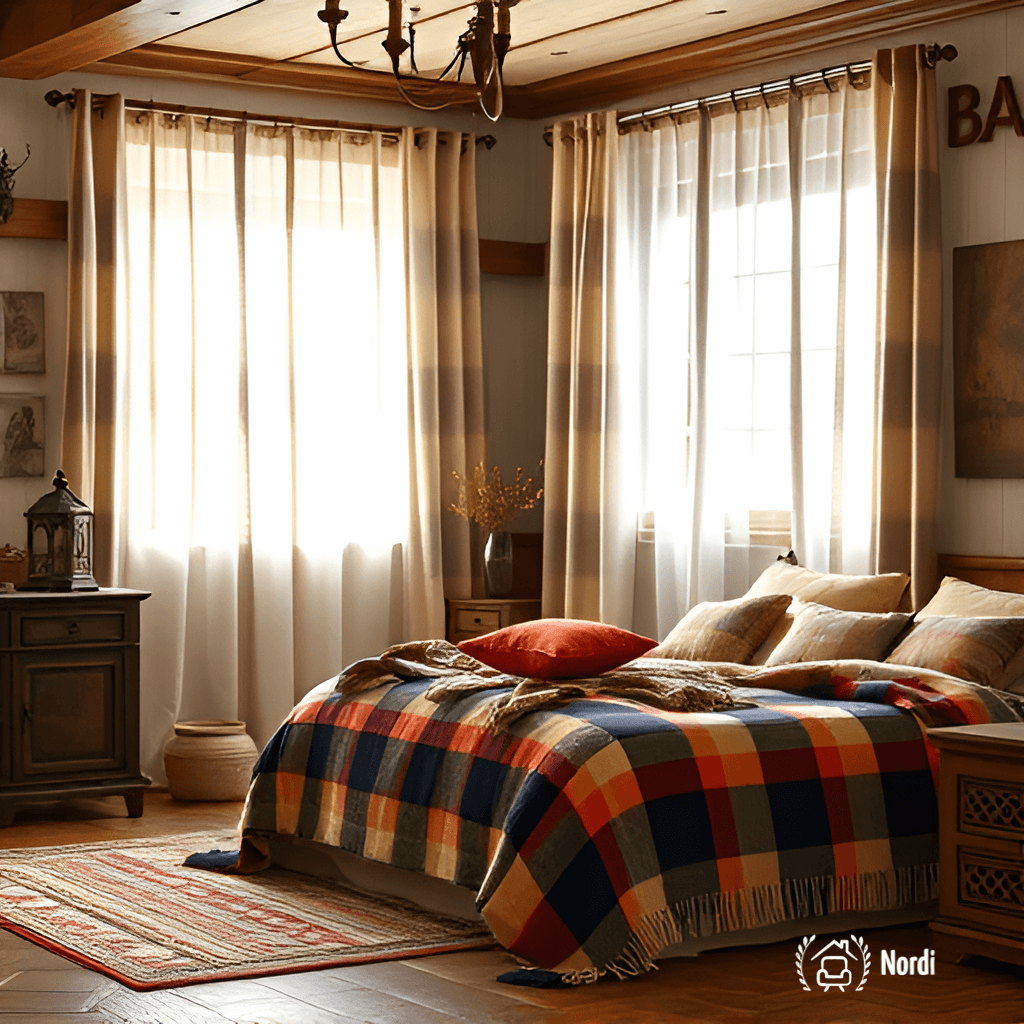
- Sleeping areas: beds with thick wooden bases and simple slats, tweed and cotton textiles.
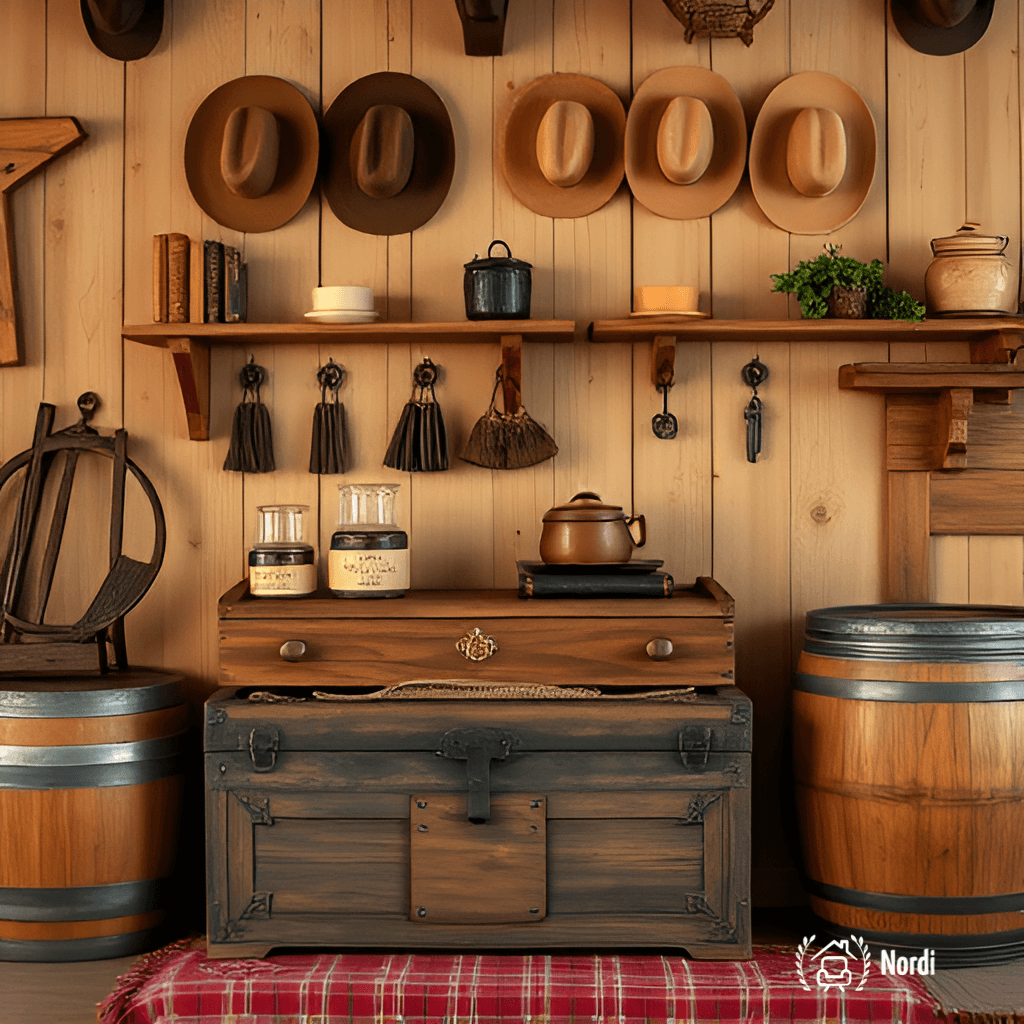
- Storage: open shelves made of recycled wood, storage chests, leather boxes, wrought iron shelving.
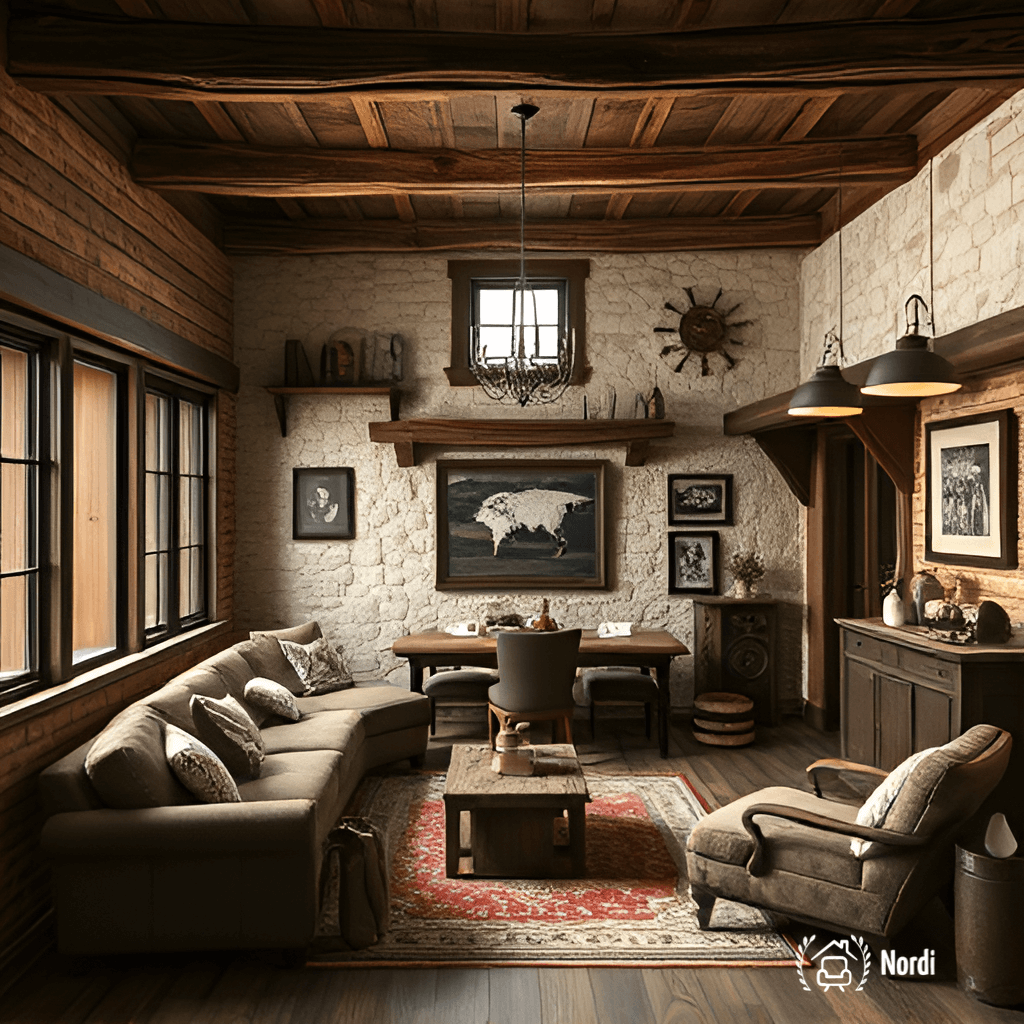
- Layout: moderate proportions. In the living room, you can create a ‘salon’-like area with two or three large items: a massive sofa, a leather armchair, a coffee table made of natural wood. In the workplace or kitchen, accessories in the form of replicas of antique utensils, steel shelves and vintage appliances.
Lighting and atmosphere
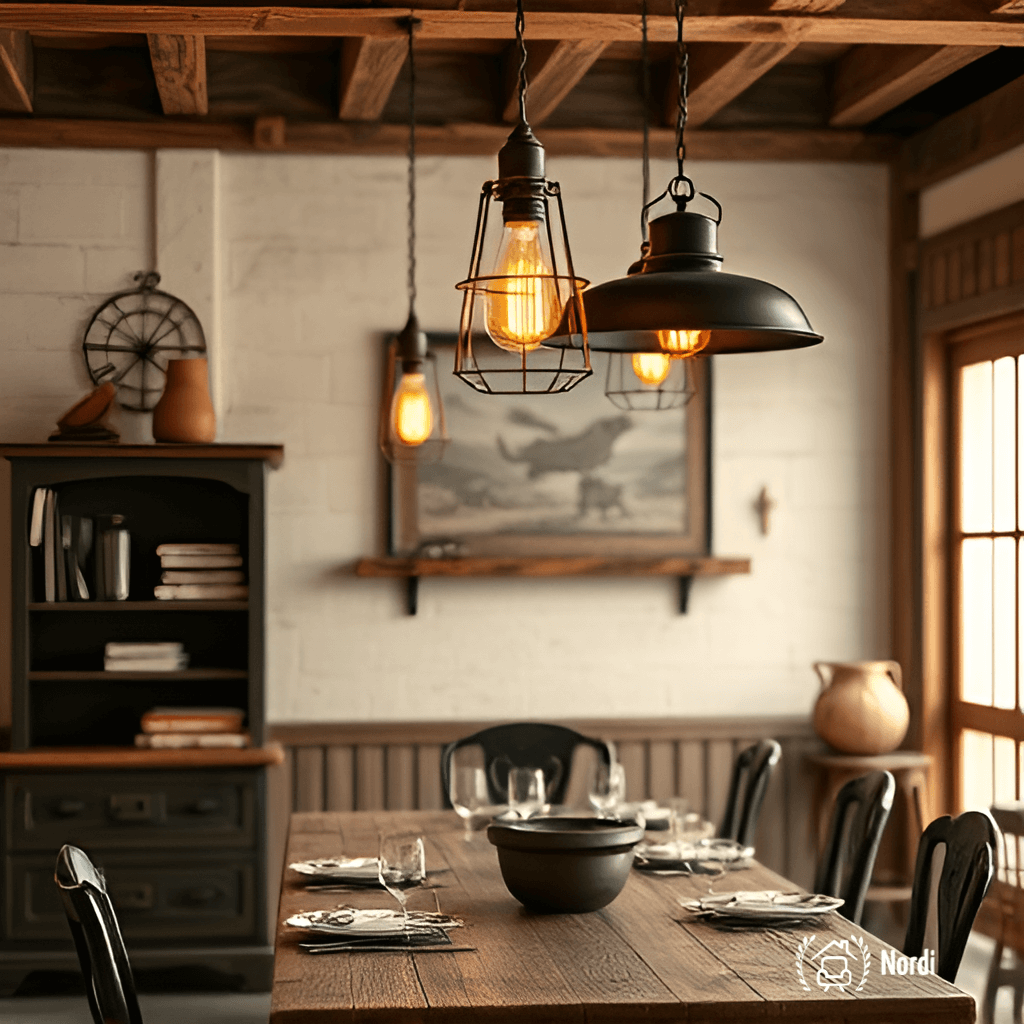
- Types of lighting: warm, saturated light. Preference for industrial-style hydraulic lamps, wrought iron sconces, pendant lights above the dining table, kerosene or imitation lamps in the ‘road’ and saloon style.
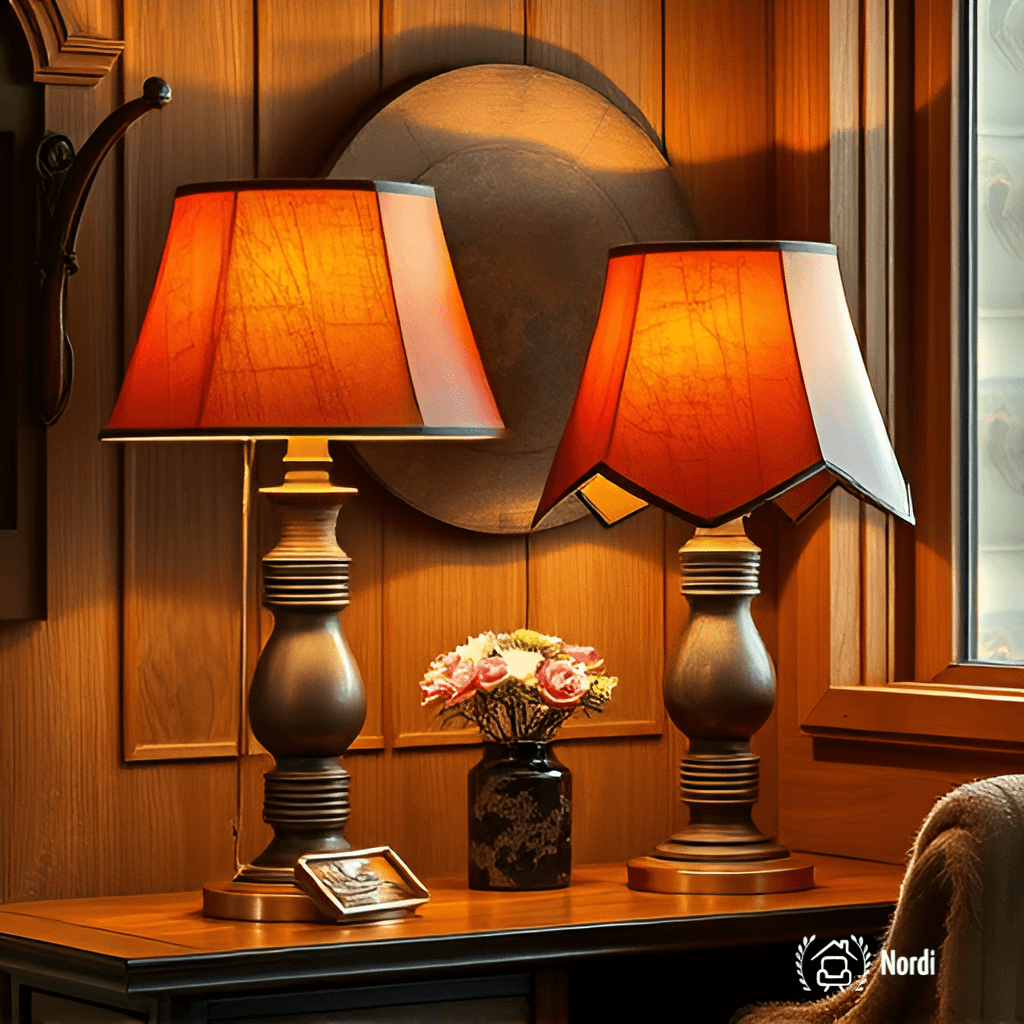
- Effect: rich light creates snugness and emphasises the texture of materials. Table lamps with leather shades and copper elements can be used to create a warm evening atmosphere.
- Placement: main light above the centre of the relaxation area, additional sources at the bar counter, above the dining area and near work areas.
Architectural details and layout
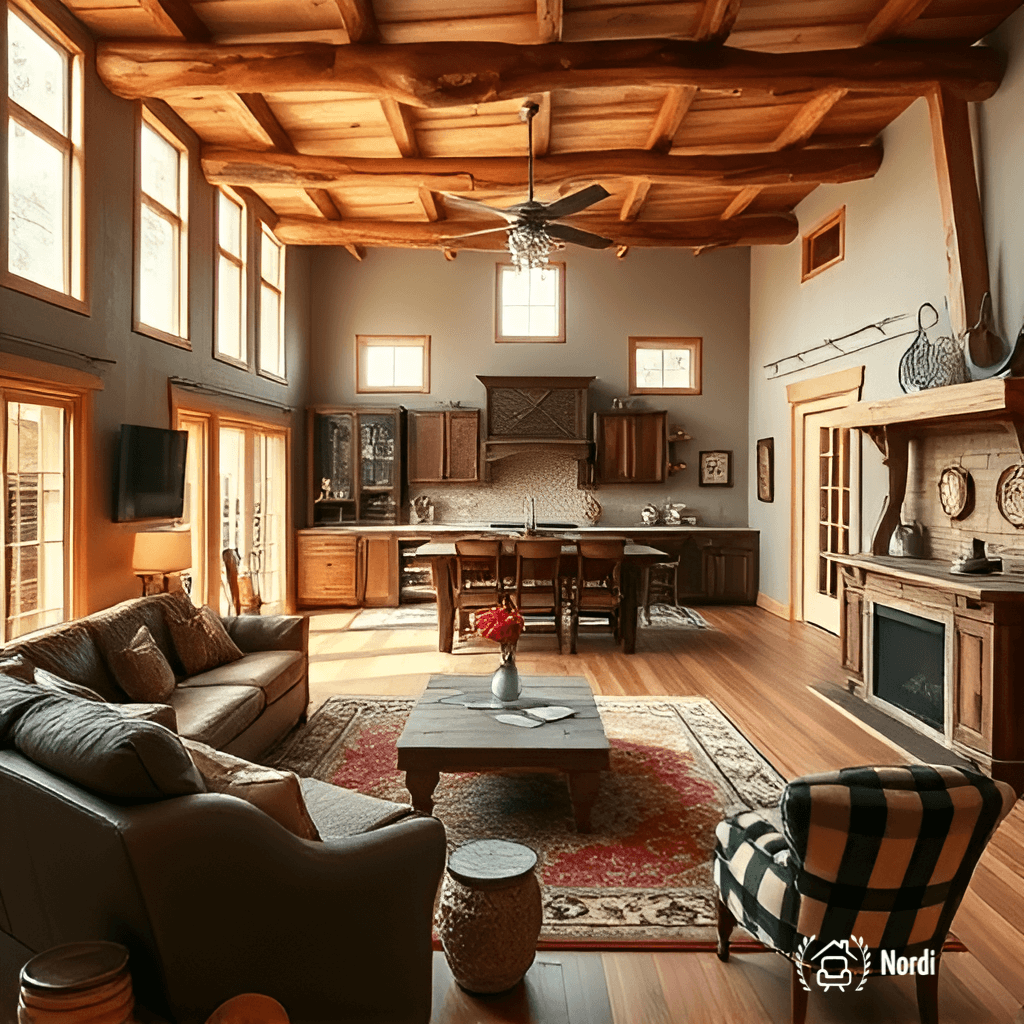
- Walls and finishes: a combination of rough planking, plaster and stone. Brickwork and exposed wood are particularly expressive.
- Ceiling: exposed beams, open construction, sometimes panoramic wooden panels. Electrical wiring is concealed so as not to detract from the aesthetics.
- Doors and partitions: saloon-style swing doors or carved wooden doors; metal ‘grilles’ can be used as decorative screens.
- Layout: spacious rooms with a ‘saloon’ area and an open kitchen create a ranch-like feel. In apartments, areas can be divided by partitions, fabric or metal decorative screens to maintain openness but provide privacy.
Decor and details that set the tone
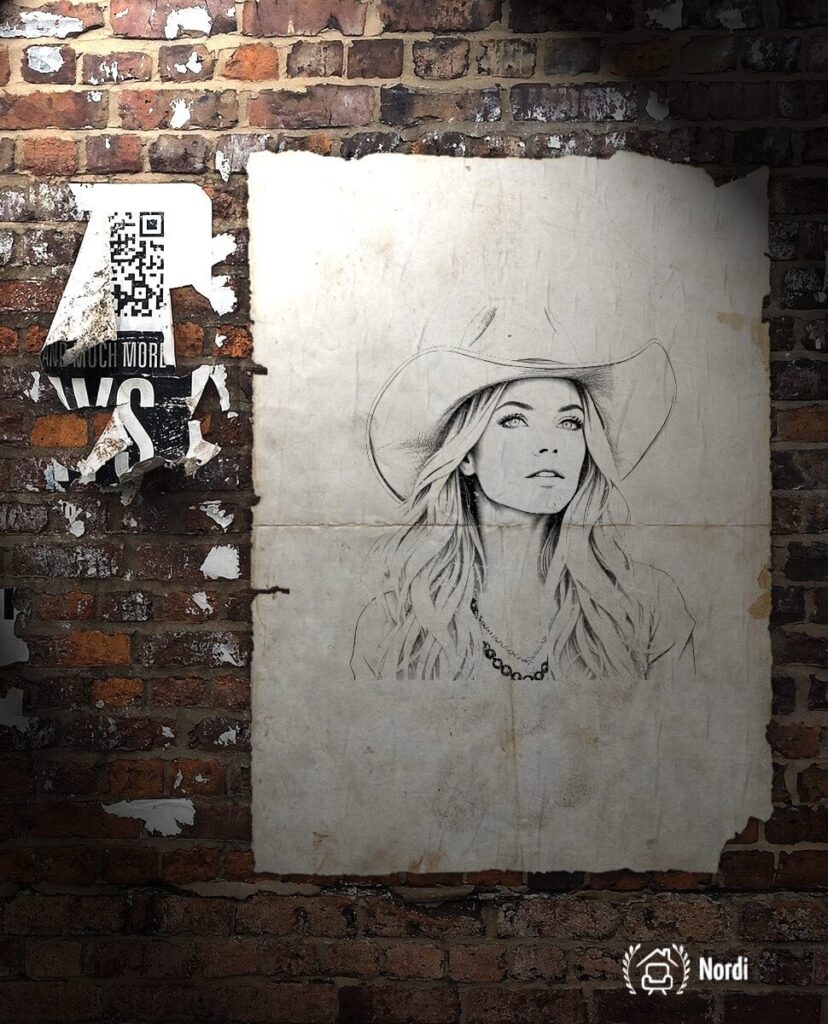
- Decorative highlights: old state maps, black-and-white period photographs, framed vintage ‘Wanted’ posters, leather belts, ropes, metal cups and jugs, imitation horns or bone elements — but without going overboard with clichés.
- Ranch elements: chests, cowboy hats on the wall, steel key rings, barrels, teak utensil shelves.
- Textiles: checked and tweed fabrics, thick curtains, blankets and bedspreads made of natural wool. They add warmth and comfort, compensating for the coldness of metal and stone.
- Carpets: natural fibre carpets — jute, sisal or wool — help soften the air and create a ‘path’ through the home.
Ideas for implementation in different types of rooms
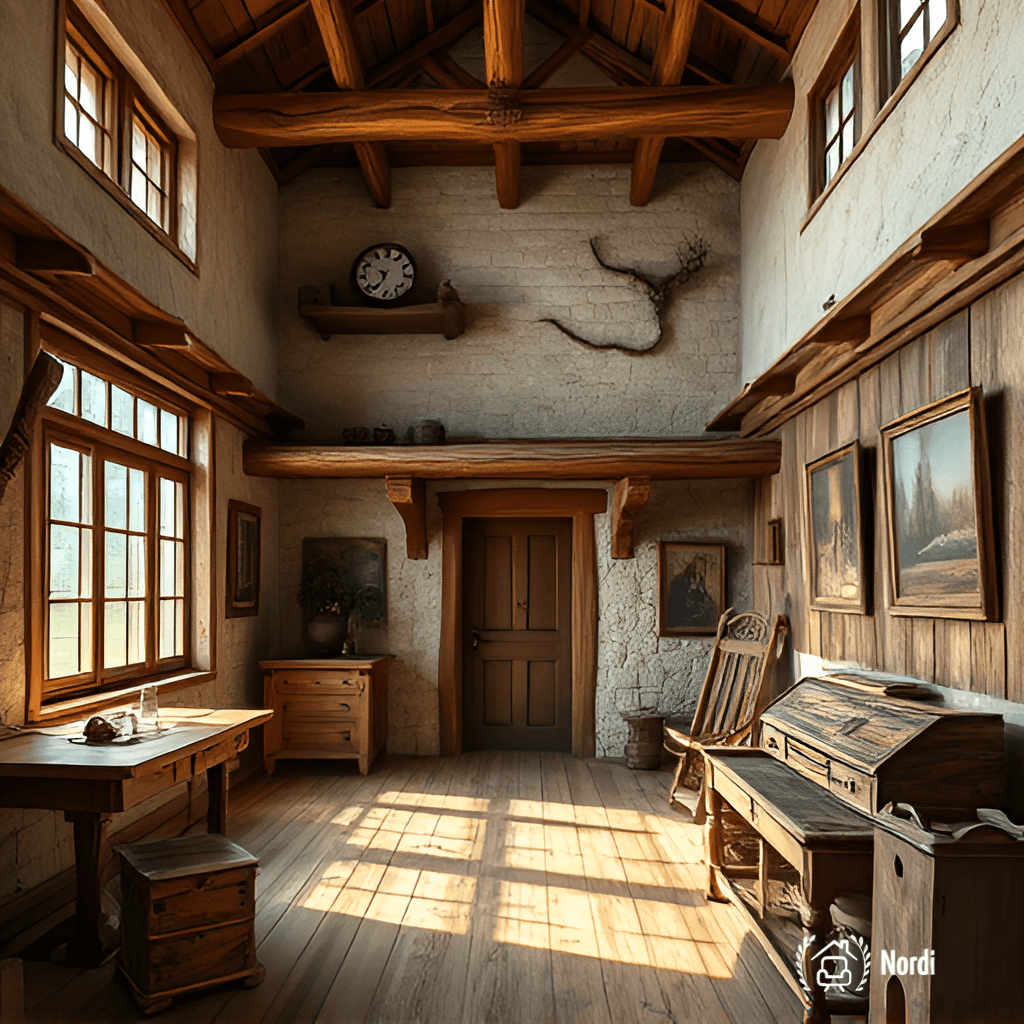
- For a country house or cottage: maximum natural wood, stone and leather. The space can be open, with large windows and views of nature; focus on texture and warmth.
- For the city and apartments: limit yourself to 1-2 large accent pieces (one leather sofa and a wooden table), create a ‘salon’ with light and dark elements, and add industrial lighting fixtures. It is important to maintain proportions and not overload the space with museum exhibits.
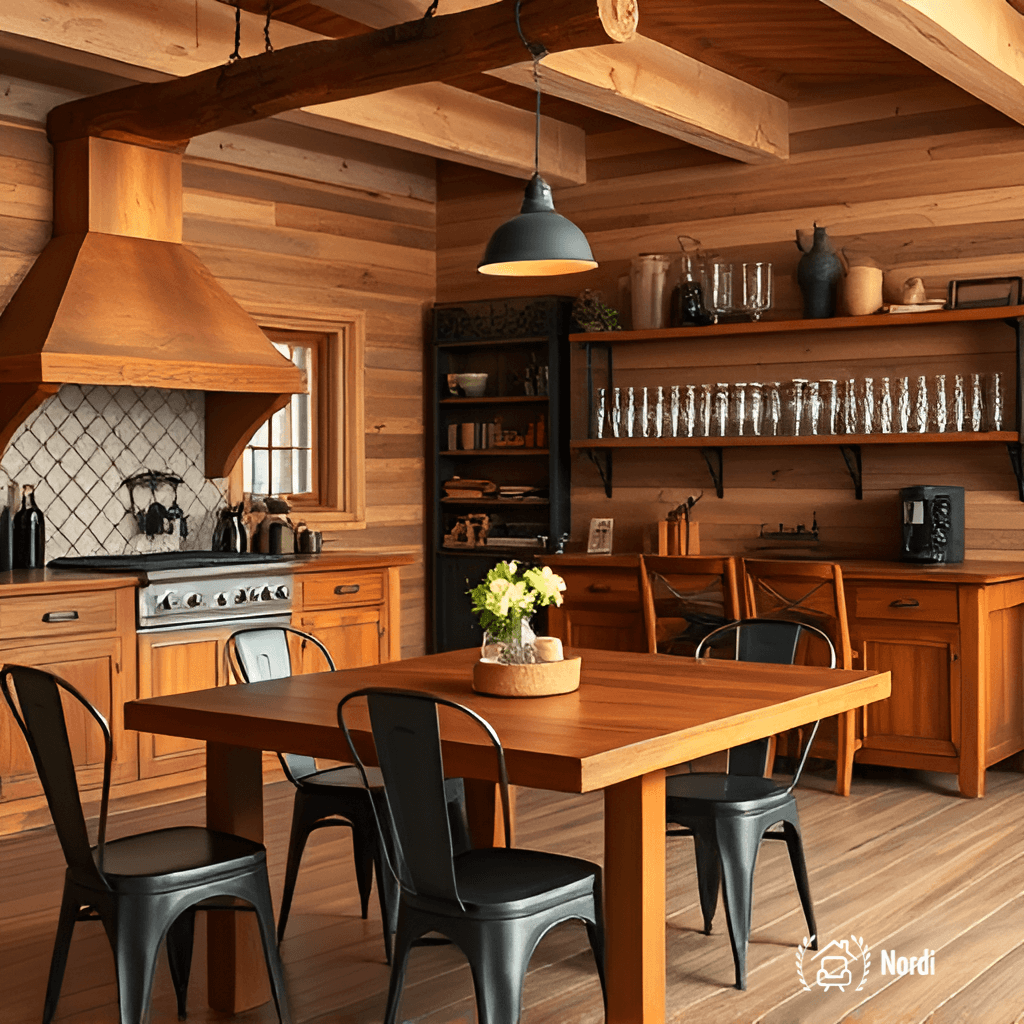
- Kitchen and dining room: solid wood counter, metal chairs, saloon-style lamps above the table, open shelves with wrought iron holders and glassware.
Practical tips for creating a look without going overboard
- Restraint is the best friend of style: choose 2-3 expressive elements and keep the rest more neutral.
- Quality is more important than quantity: one good leather sofa or a solid table is better than a set of cheap furniture.
- Balance of textures: combine leather, wood, metal and fabric textures so that the room looks cosy rather than cold.
- Accessories with character: add distinctive details such as antique clocks, chests, copies of documents or maps from the time when the territory was being developed.
- Keep comfort in mind: style should not interfere with everyday life. Choose upholstery made from durable materials, protect floors with reliable finishes, and ensure lighting is functional and comfortable.
Layout ideas (briefly)
- Living room/salon: large leather sofa, a pair of armchairs, a solid coffee table, industrial-style wall lamps, open shelves with decorative elements.
- Dining room/bar: a long wooden table, a bar counter, ranch-style chairs, pendant lamps with wrought iron elements above the table.
- Western-style bedroom: a bed with a solid wooden frame, leather poufs, warm textile finishes, eco-friendly lighting.
Conclusion
The Wild West style in interior design is a story of simplicity, resilience and freedom. It invites you to live in a place where materials speak for themselves, and light and texture create an atmosphere of relaxed warmth. Carefully selected details and moderate rustic luxury will help make your home not only beautiful, but also truly comfortable to live in.
One response to “Wild West style: features, techniques and ideas”
Howdy Nordi, I love the Wild West theme!! The cozy ness of the time and the era, the raw and simple. I will definitely be using some of these ideas and information as I work on my cabin. Thank you!!